

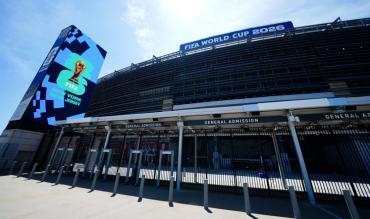

A look at the numbers and figures behind the potential earnings for host countries at the 2026 World Cup, with a full financial breakdown of projected revenue.
Betting on World Cup matches via 888sport is guaranteed to be fun and action packed. Game outcomes, however, are up in the air until the final seconds tick down.
More of a lock, though, is that loads of money will be made – for some bettors and for entities behind the scenes – as showdowns take place in America, Canada and Mexico.
Countries hosting the matches, FIFA itself and businesses catering to fans are all set to clean up. But how much will they actually make? While you spend time handicapping the teams, we’re looking into the big winners when it comes to putting on the World Cup.
Here then are the outcomes that World Cup related businesses and host countries are anticipating...
How Much Will the 2026 World Cup Generate in Total?
The World Cup promises to provide a giant boost to the finances of North American countries and beyond.
According to a report put out by Bank of America, the 2026 World Cup, deriving from studies conducted by FIFA and the World Trade Organization, the upcoming World Cup could bring $41 billion to the global economy. That’s a lot of souvenir scarves and jerseys.
How Much Will the US Make from the 2026 World Cup?
The United States has more to look forward to than action on the field. World Cup revenue there is expected to exceed $17 billion in Gross Domestic Product.
Over the course of that, an estimated 185,000 jobs are anticipated thanks to the planet’s greatest sporting event touching down in America.
What is the Economic Impact on Canada?
According to statistics released by FIFA, when the Canadian team plays in Toronto’s opening game, on June 12, it will be one reason for a serious windfall. The expectation is that Canada will benefit from a CAD$3.88 billion in positive economic output.
Additionally, 24,100 jobs are expected to be generated. Whether you speak French or English, the country’s two languages of choice, that will be a desirable result.
How Much Revenue will Mexico Generate?
Money will flow south of the border thanks to the World Cup games taking place in Mexico City, Monterrey and Guadalajara.
The country is expected to see revenues of $2.57 billion, with 105,000 jobs being created. That clearly calls for a round of Mezcal shots.
Where is FIFA’s Revenue Coming From?
According to Sports Illustrated, FIFA’s revenue stream will be three pronged. Cash is expected to flow in from $3.9 billion in broadcast rights, $3 billion from tickets and hospitality and $2.8 billion via marketing sponsorships.
That will total almost $10 billion. For comparison’s sake, the 2024 Olympics held in Paris, generated a second-place $5.24 billion.
Which Host Cities Will Make the Most Money?
While the United States may be a longshot for beating teams from more soccer-centric locales, the country will be a first-place finisher when it comes to making money by hosting the World Cup.
In descending order, according to Beltway Insider, the New York area, Los Angeles and Atlanta are expected to be the top three beneficiaries of World Cup hosting revenue.
Miami, Seattle, Houston and Dallas fill in places 4 through 7. Businesspeople in those places will be as celebratory as the fans.
How Many Jobs Will the World Cup Create?
It’s not only players on the field who will earn their keep when the big games begin. Business Insider reports that the World Cup is expected to create over 800,000 jobs around the world.
Industries expected to reap World Cup riches, as per Business Insider, are topped by hospitality, sportswear, beverages, travel and online betting.
How Does 2026 Compare to Previous World Cups?
The 2026 World Cup brings a Messi-worthy revenue jump over previous years. SportsValue.com characterizes the event as “the most lucrative in history.” FIFA’s projections are looking forward to an increase of 73 percent in yield by the time that the last whistle is blown this summer.
How Much Will Tourists Spend at the 2026 World Cup?
Tourist pockets will be bulging at the start of the World Cup and a little lighter by the end.
Across the United States, it is estimated that fan-spending will exceed $8.1 billion including hotels, travel, tickets, food, drink and souvenirs. That roughs out to some $5,400 per person.
In Mexico, there is a projected infusion of $2.25 billion worth of tourist money into the national economy.
The tourism bounty in Canada is expected to land at between $1 billion and $5 billion. While spectators count goals, we can expect financial entities across North America to be tallyingg dollars.
As fans and business types count down to the start of the games, it seems likely that both camps have three words to say: “Olé, Olé, Olé!”
