


Reading the nation’s temperature post-Brexit is an immensely challenging proposition.
It’s why we increasingly turn to polls, maybe more so than ever before. But it also explains why polls can be wrong, underestimating the strength of feeling towards a certain issue or individual.
A misreading of the nation’s mood has happened before. It can, and probably will, happen again.
So where does that leave us when it comes to predicting who resumes or takes power at the next General Election?
For sure, it is a fruitless endeavour to suck on a finger, hold it into the air, and try to gauge which way the wind is blowing. The past decade has unquestionably been the most tumultuous in British politics for half a century and the chaos isn’t close to ending yet.
Similarly, it is futile to base opinions on recent developments, scandals, or PR wins. The next General Election could conceivably be held in the summer of 2029 and if a week is a long time in politics, three-and-a-half years is an eternity.
Far better then, for now, to focus on what we’re sure of, undeniable truths that will take us into next May’s local elections.
What We Know Right Now
It used to be so straightforward. When Labour screwed up we turned to the Tories to put things right. When the Tories screwed up we brought Labour back in from the cold to put things left.
Such was the way for generations, a way that brought a semblance of balance. It was yin and yang.
Only then, in the Nineties, Labour moved to the centre ground and everything changed, then and especially now.
The initial momentous success of their political manouevring got the Conservatives in an enormous muddle, leading to in-house fighting over a contentious issue that had never really been resolved within the party.
Namely, Britain’s place in the EU.
With UKIP’s voice rising several octaves in the national conversation, and half his party pulling the Conservatives in that direction, David Cameron decided upon a referendum and we all know what a seismic event that has proven to be. It has fundamentally changed the political landscape, perhaps for the short-term, perhaps forever.
Yet, following Cameron’s resignation, Britain wasn’t ready at that point to forgive Labour for their previous perceived flaws in office. That’s partly why the Conservatives won the next two elections, the latter by a landslide.
A temporary return to the extreme left under Jeremy Corbyn also accounts for this.
A big problem however, and one that has cost us dear, is that the Tories were still in disarray and subsequently not fit to govern. Four different Prime Ministers in eight years illustrates this.
Which is why, in 2024, the UK reverted to type, punishing the Conservative by voting in Labour.
So far, so traditional, but crucially Labour have their own in-house factions undermining them while critically this is a very different country they’ re now in charge of to the one that heralded in ‘Cool Britannia’ under New Labour.
Issues now trump party politics. We are more tribalized than ever. Antipathy towards politicians has become heightened.
Extending on this latter point, a recent poll conducted by Ipsos determined that Sir Keir Starmer is the most unpopular Prime Minister on record.
Yet this time out there can be no switching back to the Tories. The deep-seated distrust of them is still too raw and furthermore they are fragmented and flailing.
Nothing exemplifies this more than their odds in the politics betting with Kemi Badenoch’s party priced up at a distant 12/1, this despite their age-old rival being in serious trouble.
The duopoly therefore is over, or at least is over for the time being, and what we are about to encounter at the next election is an entirely new vista. This is duly reflected in the betting.
No Overall Majority
Thirteen years after New Labour took power we saw the first real consequence of their pivot to the centre ground when the 2010 General Election splintered the electorate.
With Gordon Brown’s government testing the nation’s patience it was clear that Britain had an appetite for change but no longer were they faced with a simple alternative of veering to the right.
Nick Clegg’s Lib Dem party now had the left all to themselves and moreover put their policies over well when campaigning.
With three viable contenders to opt for, unsurprisingly it resulted in a hung parliament, the first since 1974. The Conservatives and Lib Dems formed a coalition that saw Brown depart Downing Street.
Can a similar outcome occur again in the current climate? We can certainly assert that the next election will not be a two-horse race, as so many others have been in the past.
There will be plenty of ‘protest’ votes going to the Green Party, from disgruntled Labourites. There will be substantially more votes heading to Reform UK, from those who believe the Tories no longer bear up to scrutiny.
Labour meanwhile may be in trouble but they remain strong enough to again win 200+ seats, as they have consistently done through the decades.
Another splintering awaits us, which is why ‘no overall majority’ is just 3/4 in the betting.
Reform UK Majority
Priced up as second favourite at 9/4 a majority victory for Reform UK comes with so many unknowns attached.
Headline-grabbing victories at local level heavily intimates that Nigel Farage’s party is ascending in the national consciousness while there is no disputing the charisma of their leader who is as influential as he is rousing.
Key policies of Reform – namely concerning the thorny topic of immigration – also chimes with many.
Yet is a charismatic leader and a strong stance taken on a single issue enough?
Look beyond these two things and Reform UK’s weaknesses come quickly to the fore, making them likely disruptors rather than bona fide usurpers to the throne.
Labour Majority
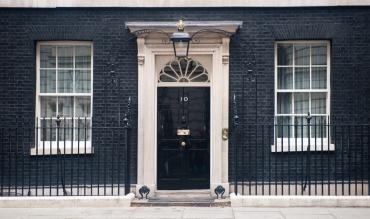
Can Labour retain the keys to 10 Downing Street with Sir Keir Starmer at the helm?
It is a question that has evidently been debated down the corridors of power of late with a reported attempted coup at their leader’s expense making the news.
It was Wes Streeting who was said to be in the frame, a highly skilled and persuasive public speaker, and should there be a successful leadership challenge prior to the next election then – theoretically at least – Labour’s current odds of 5/1 for a majority victory will look generous in hindsight.
Conservative Majority
When recently discussing the forthcoming local elections Kemi Badenoch was twice asked if the Tories could emerge victorious. On both occasions she fudged her answer which was extremely telling.
The Conservatives’ over-riding hopes for the May’s elections is to avoid another chastening heavy defeat.
As for the next General Election, while it may potentially reside far off in the distance, the Tories are still a long way away from regaining the trust of heartland voters, never mind the floating masses.
