

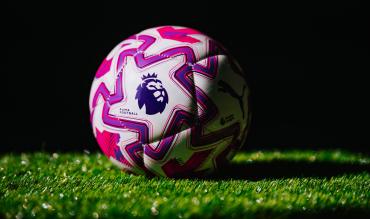

888sport look at Europe's biggest football divisions, ranking the best leagues across the continent while discussing the biggest teams in each competition.
The top five leagues in European football remain a debate about more than trophies.
Top 5 Leagues In Europe:
- Premier League
- Serie A
- La Liga
- Bundesliga
- Ligue 1
Domestic competitiveness, continental success, transfer power, and the depth of elite clubs all matter, but the Premier League continues to set the standard because it combines financial scale with repeated European results.
Premier League
The Premier League is ranked first in European football because it has produced three of the last six European champions and two all-English finals in that span.
It also draws talent from across the world, giving clubs outside the traditional elite enough power to compete in the transfer market with most of Europe.
Arsenal claimed their first Premier League title in 22 years, 888sport make them the 6/4 favourites to win the league next season.
The scale and success of English football is reinforced by the number of clubs that remain relevant in UEFA competitions each season.
The league has also become the strongest benchmark for financial strength in the game. Even so, Manchester City’s domestic dominance has made the title race less unpredictable than in earlier eras, which is the main argument against an even stronger entertainment case.
Serie A
Serie A holds second place on the strength of a clear European resurgence. Three Italian teams reached the last eight of the 2022-23 Champions League, and Milan met Inter in the semi-finals. That kind of concentration of deep runs has not been an isolated flash of success.
Italian clubs have also collected meaningful results in the Europa League and Conference League. Roma reached the Europa League final after winning the Conference League in 2021-22, while Fiorentina were Conference League finalists in 2022-23. Lazio also progressed comfortably through the 2024-25 Europa League knockout phase.
Serie A still trails the Premier League in financial reach, but its recent continental record gives it a stronger case than in much of the previous decade. Inter’s Champions League level, together with Juventus and Milan’s continued presence, keeps the league firmly in the top tier.
La Liga
La Liga ranks third because its two giants still belong among Europe’s most credible title contenders, even though the league’s overall depth has slipped. Real Madrid and Barcelona remain central to the continent’s power structure, and both continue to carry the Spanish case at the top end.
Real Madrid are in transition around Kylian Mbappe, while Barcelona are still building under Hansi Flick and continue to carry off-field constraints.
Spain’s lower ranking is driven by the gap between its elite pair and the rest. Sevilla, Atletico, and Villarreal have all won the Europa League in the last decade, but only one La Liga club reached the knockout stages of the 2022-23 Champions League.
Bundesliga
The Bundesliga sits fourth because it still produces elite teams, but it has not matched the sustained European depth of the leagues above it. Bayern Munich and Borussia Dortmund remain the dominant reference points, and the 2013 all-German Champions League final remains the most compelling example of the league’s peak level.
German football has also regained some credibility through recent Champions League representation. There have been four German finalists since that 2013 final, including two in 2024. Bayer Leverkusen’s title run has further strengthened the league’s domestic competitiveness argument.
The problem is structural consistency. For too long, the Bundesliga has looked like a league where only one or two clubs can realistically challenge at the highest level, and that limits its overall standing compared with Serie A and La Liga.
Ligue 1
Ligue 1 completes the top five because Paris Saint-Germain give France a level of continental relevance that few other domestic leagues can match. Even after the departures of Lionel Messi, Kylian Mbappe, and Neymar, PSG still keep France in the European conversation.
The challenge for Ligue 1 is that its European record outside PSG is thinner than the leagues above it. France has not matched the recent final appearances and deep knockout runs produced by Italy, Spain, Germany, or England, and that has left it vulnerable to comparison with the Eredivisie.
Domestic competitiveness is a positive for Ligue 1, and clubs such as Nice have invested in the hope of becoming more regular Champions League participants. Even so, the league’s fifth-place finish reflects the gap between one dominant club and the broader European performance required to rise higher.
Why The Premier League Remains The Best League In Europe
The Premier League is the best league in European football because it combines scale, competitive depth, and continental output better than any rival. Its clubs continue to win major European trophies, and its financial strength gives more than one team the resources to compete at the top level.
That combination matters more than a single dominant club or a brief surge of success. Serie A has improved, La Liga retains its elite names, the Bundesliga has regained momentum, and Ligue 1 has PSG, but none can yet match the Premier League’s combination of breadth and repeat success across Europe
