

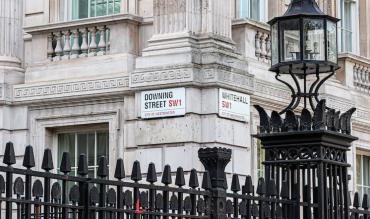

Since being voted into power in July 2024 things have not gone according to plan for Labour. Scandals have led to high-profile resignations. Their manifesto has been broken. Subsequently, trust is at a low.
Just three months into the party’s tenure at 10 Downing Street a YouGov poll asked Britons what ‘is the single best thing Labour have done in their first 100 days in office’? A substantial 43% responded with either ‘nothing’ or ‘only negatives’.
Fast forward another couple of hundred days and reportedly there was an attempted coup to oust Sir Keir Starmer of his premiership. Political manoeuvrings saw that off but we cannot rule out further challenges to his leadership, perhaps beyond next May’s local elections.
To place all this in its proper context, Labour succeeded a Conservative government that had utterly exhausted the nation’s patience. Subsequently, this was supposed to be the new ruling party’s honeymoon period because after all, things could only get better.
Instead, a recent Ipsos poll determined that Sir Keir Starmer was the most unpopular Prime Minister on record so naturally, our thoughts turn to the next General Election and, more specifically, when that might be held.
Or put another way, there is a general acknowledgement that on this occasion we have skipped the honeymoon and gone straight to the bickering stage. Consequently, there are plenty of speculative wagers being made in the politics betting as to when a divorce might be forthcoming.
2029 or Later - 10/11
The first, and most important, consideration regarding the timing of the next General Election is the latest date it can be held. A full term held by the Labour government will see them in power until July 2029 – five years to the day from taking office – whereupon the Prime Minister will be compelled to call an election.
An additional five weeks is then tacked on, sufficient time for campaigns to be run by all concerned. This takes us up to August 15th, 2029.
Around this period Starmer – or whoever has usurped him as PM from the Labour front benches – will ask King Charles III to dissolve parliament, to allow for electioneering to commence.
Departmental activity will be restricted so as not to directly influence the electorate. MPs will instead start knocking on doors and kissing babies.
So, will Labour see out a full term in office, thus putting their fate into our hands at the latest possible juncture?
Looking back through the mists of time we find that eight governments have done this post-war. That’s 40% of all of the elections held in the last 80 years.
Moreover, to further explain why ‘2029 or later’ is presently priced up as favourite in the betting, we find that almost all of those eight governments were not in particularly good shape. Their hold on power was precarious so naturally they clung to it for as long as humanly possible.
John Major’s latter years perfectly illustrates this, with the Tories intuitively aware of which way the wind was blowing. The same can be said of Gordon Brown’s government.
2028 - 7/4
Since 1945 there have been seven elections held four years after the last one and what is pertinent about each is that the time-frame denotes stability and confidence at the very top.
By voluntarily shaving off a potential further year in office the government of the time is making a very clear statement to the British public, essentially saying ‘look, let’s get this out of the way nice and early so we can carry on with the job at hand’.
Margaret Thatcher’s first term in office illustrates this. As too does Tony Blair’s.
Furthermore, it may be a date determined by strategy, with the reigning party polling particularly strongly or, conversely, their opponents are mired in disarray.
It’s well worth noting that an election based on such strategical considerations only really applies to a four-year gap.
No matter how small the risk, and no matter how divergent the polling is at the time, why would a government take the chance of being ousted from power just two or three years into their time?
2027 Or Earlier
Recent years has seen a dramatic increase in elections called soon after the last. All of these have involved the Conservatives as they splintered into a calamitous mess post-Brexit.
Still, it may be felt by some that quick turnovers in power has now become the norm and that we now reside in an era of political chaos.
If you believe this, then the following odds will be of interest.
If these odds appeal it is important to note the following.
The only time when the date of a General Election is not of the Prime Minister’s choosing is when a motion of no confidence vote is held, usually introduced by the leader of the opposition. The vote is then put to all MPs serving in the House of Commons.
The current leader of the opposition is Kemi Badenoch of the Conservatives. With the Tories looking to regroup and rebuild after a heavily bruising defeat last year it is highly unlikely they will have much appetite to directly challenge Sir Keir Starmer’s status until they are in a strong enough position to compete at the polling stations.
Other Key Factors
Presently, the Next General Election Year Odds is heavily influenced by Labour’s initial failure to justify their 412-seat majority victory in 2024.
A change in leadership, however, with - let’s say, for the sake of argument, Wes Streeting – at the helm could hugely alter such thinking, especially if Starmer’s successor manages to convince the public that they can end the warring factions within the Labour ranks and take the party in a more palatable direction.
Additionally, the outcome of next May’s local elections could have a seismic bearing on when the next General Election is called.
Can Labour hold their own against the recent rise of Reform UK? If not, expect odds for a 2026 or 2027 General Election to shorten.
