• Computer predictions are becoming an increasingly popular means to simulate sporting events
  • Bettors can look to these outputs when placing their wagers
  • How seriously should we take computer predictions?

Every few weeks we are welcomed with the latest computer prediction for whatever sporting event is in the centre of the news cycle.

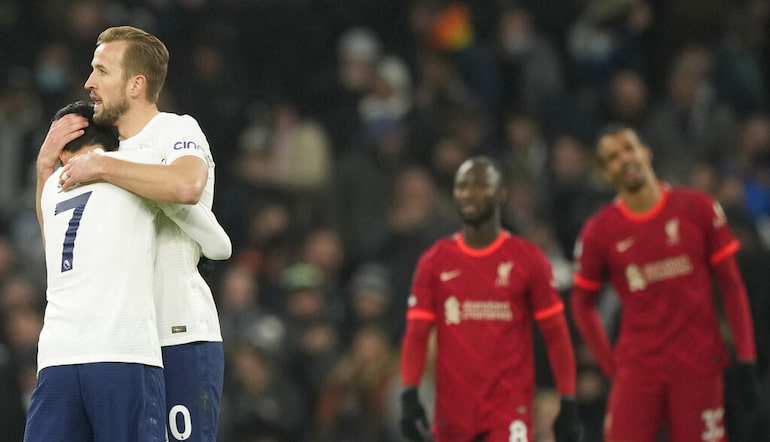
Projected Premier League tables to predicted Super Bowl scores, these supercomputer outputs are met with debate, analysis and sometimes mockery.

When placing a bet, though, gamblers should be looking at any means to enhance their knowledge.

Landing winners requires good fortune, of course, but making well-informed decisions is crucial too, and absorbing the latest computer prediction outputs is a part of that.

Some are sceptical of computer predictions. To others, it nears gospel, a gold-standard of sporting foresight. The truth is likely somewhere in between.

The unpredictability of sport is what makes it so enticing to billions around the world.

It makes nailing a football prediction particularly challenging, and means even with all the data and the most powerful computers in the world, projections are going to swing and miss at times.

Why Are Computer Predictions Useful

While we may all want to believe in our own eye test and analysis, computer processing is obviously a more objective, powerful way to forecast sport.

The computer predictions that attract headlines for the Premier League and other big competitions contain reams of data and information. It’s a way of combining thousands of factors from advanced statistics to injury records and historical trends.

This is a tool that bettors and fans alike can contemplate either as part of their own debate or when pondering upcoming football betting decisions.

Of course, this isn’t limited to the Premier League and its peers in Europe. A quick Google search can find supercomputer predictions for all manner of sports, with many offering a weekly look at the upcoming NFL games.

Sites like CricViz are a must for cricket fans. While WinViz has attracted some high-profile critics, it’s a useful tool for gamblers to keep an eye on the state of the game at any given moment.

From NFL and the NBA to World Series favourites and Grand Slam winners in golf and tennis, there will be thousands of simulations being run.

Alongside the standard betting picks, computer predictions are a foundation of sports betting around the world in the 2020s.

Betting Picks With Computer Predictions

Whether concocting your own mathematical prediction or borrowing some projections from elsewhere, many bettors will lean into data analysis for their betting picks. It makes good sense to use all the tools at your disposal.

Computers have enhanced so much of our daily lives, they are a part of things we don’t even consider, so it would be foolish to overlook their use when it comes to betting decisions.

Sports fans have their own means of picking their wagers. Where some may trust their hunch or have a love for BTTS markets, there are other supporters who will take a more clinical, analytical approach, diving deep into the numbers to make a well-informed choice.

While this isn’t a fool proof way to secure wins, it’s a popular option among the sports betting community.

The more data that is available, the more people can throw into their simulations. Many will boast of tested formulae to beat the bookies.

There are no guarantees in sport. Even the most successful computer predictions will fall short, but those with a history of success can gain the trust of bettors around the world.

Ultimately, bettors will be looking to weigh up a variety of factors when placing their wagers. That’s been the case as long as gambling has been around. It’s easy to throw away the output of supercomputers as clickbait, but it has value to punters.

Each gambler will place a different significance on such projections – it’s up to each individual to choose what they trust when placing their bets.

Premier League Supercomputer Prediction

While these predictions are fluid as more information is learned about teams throughout a campaign, there are often common themes throughout different computer projections.

The 2021-22 season is set to be a thriller, as the Premier League odds suggest, but some simulations claim the title race will be face less interesting than it seems.

There is always a healthy margin for error in such estimations. No computer had Leicester as title winners before their 5000/1 triumph, with many expecting them to drop off even at the halfway point.

Not many computer predictions gave the Patriots a chance when they trailed the Falcons 28-3 in Super Bowl LI.

Regardless of if you take such calculations with a pinch of salt or consider them integral, it’s always an intriguing point of debate.

On that note, here’s one computer forecast for the 2021-22 Premier League table from October. It’s great news for Chelsea, but not so good for Norwich, Southampton and Burnley.

  1. Chelsea, 99 points
  2. Liverpool, 89 points
  3. Manchester City, 76 points
  4. Brentford, 74 points
  5. Manchester United, 70 points
  6. West Ham, 70 points
  7. Everton, 69 points
  8. Brighton & Hove Albion, 63 points
  9. Aston Villa, 53 points
  10. Wolverhampton Wanderers, 52 points
  11. Leicester City, 45 points
  12. Tottenham, 43 points
  13. Arsenal, 43 points
  14. Crystal Palace, 42 points
  15. Watford, 36 points
  16. Leeds United, 33 points
  17. Newcastle United, 29 points
  18. Burnley, 23 points
  19. Southampton, 21 points
  20. Norwich, 14 points

*Credit for all of the photos in this article belongs to AP Photo*


FIRST PUBLISHED: 10th December 2021

December 10, 2021
Body

Sam is a sports tipster, specialising in the Premier League and Champions League.

He covers most sports, including cricket and Formula One. Sam particularly enjoys those on the other side of the Atlantic Ocean – notably MLB and NBA.

Watching, writing and talking about sports betting takes up most of his time, whether that is for a day out at T20 Finals Day or a long night of basketball.

Having been writing for several years, Sam has been working with 888Sport since 2016, contributing multiple articles per week to the blog.

Sam Cox
factcheck
Off
hidemainimage
show
Hide sidebar
show
Fullwidth Page
Off
News Article
Off
  • There’s a lot to consider when selecting the best football cities around the world

  • Team success and passionate rivalries are crucial

  • Read below for our group of the top 10 football cities on the planet 


Anyone who keeps track of online betting will have their own views on the best football cities around the world.

This is a subjective category, and people will use different credentials to evaluate what makes a footballing city ‘great’.

This isn’t purely about filling the biggest stadiums in the world, nor is it a tally of silverware. Rivalry and success matters, of course, yet this is an evaluation of a city beyond the numbers.

We are looking for cities that live and breathe the sport, and a few areas immediately come to mind when this topic is brought up.

Featuring some of the most famous clubs in football betting odds, here are our top 10 football cities around the world.

Istanbul

Turkey’s ‘Big Three’ are all from Istanbul, combining for 57 titles since the Turkish Süper Lig was founded in 1959.

Bet Calculator

Add in İstanbul Başakşehir, and that number moves to 58. The dominance of Istanbul across Turkish football cannot be overstated.

These clubs are not just foes on the field either. There is a fierce rivalry between each of the Big Three, and the The Intercontinental Derby is one of the most intense contests in world football.

Fenerbahce and Galatasaray have Graeme Souness to thank for their rivalry jumping to another level of footballing hatred. While three is often a crowd, Besiktas are hardly friendly with their city neighbours either.

Not many cities can come close to how Istanbul feels about its football teams.

Krakow

If your derby is called the ‘Holy War’, there’s a good chance the city is pretty serious about its football.

Wisla Krakow and Cracovia first played each other in 1908, and it has long been one of Europe’s most aggressive rivalries.

With a long history of violence between fans and the police, the Holy War divides a city. The stadiums are less than a mile apart, yet the rivalry is often brutal in nature.

Hutnik Kraków should also be mentioned, as they also hold a bitter friction with Wisla Krakow and Cracovia despite spending a lot of time outside of the top flight in recent decades.

Manchester

The Manchester derby is often talked down as a modern creation after years of disparity.

There’s some truth in that, of course, and the relationship between United and City cannot be compared to many of the other city duels on this list.

Manchester is a truly football mad city, though. That much is clear.

Currently with seven teams in the Football League, Greater Manchester has long been a hotbed of professional clubs far beyond the riches of City and persistent attention on Old Trafford.

Glasgow

Glasgow is the home of Scotland’s largest stadia and has four teams in the Scottish Football League. 

The Old Firm Derby deservedly sits alongside the Superclásico, Intercontinental Derby and others among the fiercest rivalries in the sport.

Celtic or Rangers have combined to win 106 league titles, and you have to go all the way back to 1985 for the last time any other team lifted the trophy.

While the hostile atmospheres of Ibrox and Celtic Park are what first comes to mind with football in Glasgow, it would be a mistake not to mention Queen’s Park and Partick Thistle, who have contributed to the city’s deep football history.

Buenos Aires

There’s a strong case for the Superclásico to be regarded atop the list of the biggest football rivalries.

River Plate and Boca Juniors are the names recognised worldwide, yet they are just two of an astonishing 24 professional teams in Buenos Aires.

River and Boca are the two most successful teams in Argentinian football, combining for 71 league titles and 10 Copa Libertadores crowns.

While clearly owners of the most packed trophy cabinets, their achievements are supplemented by the glories of San Lorenzo, Huracán and numerous other clubs who have won the Argentine league title and/or lifted continental hardware.

The derbies are just as plentiful as the silverware in Argentina’s capital. It’s got a football obsession only a handful of cities can come close to.

Seville

While two of the most successful football clubs do battle in El Clasico, no rivalry in Spanish football comes close to that of the Seville derby between Real Betis and Sevilla.

Like many local derbies, the historic context of this duel involves a split at Sevilla, which led directly to the founding of Real Betis.

El Gran Derbi first took place in 1915, and Sevilla holds a comfortable advantage in the record books with 64 wins to Betis’ 39.

It’s only a 10-minute drive between the two stadia. The whole of Seville is taken over on derby day. The larger cities of Madrid and Barcelona may have had more success, but neither can compare to the passion in Seville.

Sao Paulo

Palmeiras, Corinthians, Sao Paulo, Santos. What more is there to add?

Sure, Santos is actually a few miles outside the city, but the expanding metropolis has effectively engulfed the club to be included alongside the other Sao Paulo megapowers.

When it comes to local rivalries, we can take our pick from a few here.

The Paulista Derby, the Clássico Majestoso and The Kings' Clash are competed between combinations of Palmeiras, Corinthians and Sao Paulo, while Santos shares the Clássico Alvi-negro, San-São and Clássico da Saudade with Corinthians, Sao Paulo and Palmeiras respectively.

Tens of millions support this quartet all over Brazil. Over 12 million call Sao Paulo home, and there’s no question it’s one of the world’s best football cities.

Athens

Greece’s ‘Big Three’ are located within a stone’s throw of each other.

Olympiacos might be in Piraeus, but they are just a 20-minute drive from AEK Athens’ stadium and a similar distance from Apostolos Nikolaidis Stadium, home of Panathinaikos.

Even with the emergence of PAOK, the trio remain dominant in Greek football. They have combined for 77 of 84 Super League crowns and regularly occupy the top three spots in the table.

Controversy has only intensified the feelings between Athens’ three superpowers over the last few decades. Taking in the atmosphere when these teams meet is one for any football fan’s bucket list.

Lisbon

Sporting have never finished lower than seventh. Benfica have never finished lower than sixth. The two Lisbon clubs are prevalent in European football prediction tips each weekend.

Belenenses are one of two clubs outside Portugal’s traditional Big Three to have won a league title, taking Lisbon’s tally to 57.

The Leões and As Águias share the dérbi de Lisboa, the biggest rivalry in Portugese football.

First played in 1907, it’s been relatively level throughout the last century-plus. Benfica’s 86 wins is only 10 more than Sporting have accumulated.

Milan

It’s usually capital cities that are in the reckoning here, but Milan bucks that trend with two of Europe’s giants.

Inter and AC have cohabited since 1947, though don’t let that distract from what is a bitter relationship between Italy’s second and third-most successful clubs.

They have combined for 37 titles, with Inter’s triumph under Antonio Conte edging them just ahead with 19 Scudetti.

Other than Turin, no other city in Italy has amassed more than 10 league titles, and between them, Inter and AC have lifted the European Cup/Champions League on nine occasions.


December 10, 2021
Body

Sam is a sports tipster, specialising in the Premier League and Champions League.

He covers most sports, including cricket and Formula One. Sam particularly enjoys those on the other side of the Atlantic Ocean – notably MLB and NBA.

Watching, writing and talking about sports betting takes up most of his time, whether that is for a day out at T20 Finals Day or a long night of basketball.

Having been writing for several years, Sam has been working with 888Sport since 2016, contributing multiple articles per week to the blog.

Sam Cox
factcheck
Off
hidemainimage
show
Hide sidebar
show
Fullwidth Page
Off
News Article
Off