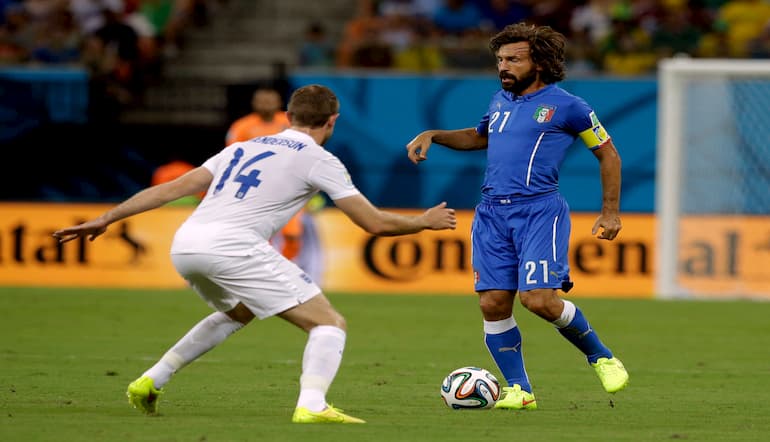
Without a doubt, the Champions League is the pinnacle of club football. This is the competition that every player wants to win and 2018/19 winners Liverpool will fancy their chances of retaining the crown come the end of the season.

With so much hype and excitement surrounding the competition, supporters from all over the world will be tuning in to watch their favourite teams in action. Whilst you’re waiting for the next round of Champions League matches, check out our quiz…


Champions League Quiz: Questions

  • When Did The European Cup Start?
  • Who Won The First Ever European Cup?
  • Which Stadium Has Hosted The Most European Cup Finals?
  • When Did The Champions League Format Begin?
  • Who Is The Top Goal Scorer In Champions League History?
  • How Many British Teams Have Won The European Cup?
  • The Most Successful British Club In Champions League History Is…
  • Which Player Has Made The Most Champions League Appearances?
  • Which Nation Has The Most European Cup Wins?
  • Who Scored The Fastest Goal In Champions League Final History?


Okay, so now for the answers...

When Did The European Cup Start?

Answer: 1955/56. Just 16 teams were involved in the inaugural competition, with a straight two-legged knockout format. 64 years later, the tournament has grown somewhat but is still going strong.


Who Won The First Ever European Cup?

Answer: Real Madrid. La Liga giants Real Madrid were victorious, defeating French club Reims 4-3 in the final. The first European Cup final took place at the Parc des Princes, Paris with an estimated attendance of 38,200 spectators.


Which Stadium Has Hosted The Most European Cup Finals?

Answer: Wembley Stadium. The old venue hosted five European Cup events before it was closed in 2000 with the new Wembley hosting two Champions League finals since then. In total, London has hosted seven finals.


When Did The Champions League Format Begin?

Answer: 1992/93. By this stage, Europe’s elite tournament was very competitive and UEFA decided to introduce a round-robin group stage. This allowed more than one club from each country to enter the competition – and that is the Champions League as we know it today.


Who Is The Top Goal Scorer In Champions League History?

Answer: Cristiano Ronaldo. With 126 goals and counting, Ronaldo is the most prolific goal scorer in Champions League history. The Portugal legend will be looking to add to his tally whilst playing for Juventus in the 2019/20 competition.

How Many British Teams Have Won The European Cup?

Answer: Six. Celtic, Manchester United, Liverpool, Nottingham Forest, Aston Villa and Chelsea have all won Europe’s elite club competition. Leeds United, Arsenal and Tottenham Hotspur have competed in the final but these three teams fell short in their pursuit of glory.


The Most Successful British Club In Champions League History Is...

Answer: Liverpool. With six European Cup triumphs, Liverpool are Britain’s most successful team. Jurgen Klopp’s side have reached the Champions League final in each of the previous two seasons, losing to Real Madrid in 2017/18 before beating Tottenham in 2018/19.


Which Player Has Made The Most Champions League Appearances?

Answer: Iker Casillas. Casillas has played 177 Champions League games throughout his professional career, most of those for Real Madrid. However, he has racked up a number of appearances since joining FC Porto in 2015.


Which Nation Has The Most European Cup Wins?

Answer: Spain. Spanish clubs have an excellent record in Europe, with 18 victories from 29 finals. Real Madrid have won 13 of those titles while Barcelona have five triumphs – four of those coming during the Champions League era.


Who Scored The Fastest Goal In Champions League Final History?

Answer: Paulo Maldini. The AC Milan legend scored after 51 seconds in the 2005 Champions League final against Liverpool. Unfortunately for the Serie A giants, they went on to lose but Maldini still holds the record for the quickest goal in Europe’s showpiece fixture.


*Credit for the main photo belongs to Daniel Cole / AP Photo*

September 18, 2019

By Alex McMahon

Alex McMahon Sport
Body

Alex is a sports betting tipster, specialising in Premier League football, the Champions League and horse racing.

He loves placing a weekly accumulator on the football at the weekend and dreams of landing the big winner that will take him back to Las Vegas.

As well as writing sports betting tips for 888sport since 2015, Alex has produced content for several international media companies, such as Goal.com and The SPORTBible. 
 

Alex McMahon
factcheck
Off
hidemainimage
show
Hide sidebar
show
Fullwidth Page
Off
News Article
Off

The wait for the big three to be succeeded atop men’s tennis has been a long one. Novak Djokovic, Rafael Nadal and Roger Federer’s grasp on supremacy remains strong. Nadal might be the best ever, Djokovic and Federer have a claim to that same throne.

Whether it’s their greatness or the failings of the chasing pack that have caused it, the outcome is the same: the top of men’s tennis has looked the same for much of the last decade (and beyond if we include Federer’s noughties dominance).

Since the start of the 2006 season, 56 Grand Slams have taken place. Outside of the big three, only Stan Wawrinka and Andy Murray have won more than one with a grand total of six between them. Marin Cilic and Juan Martin del Potro have won one each.

Challengers Daniil Medvedev and Dominic Thiem both reached Grand Slam finals in 2019, though they were swept aside by Rafael Nadal in the US Open final and French Open final respectively.

For all the young talent on the tour, losing in Grand Slam finals puts Thiem and Medvedev a step ahead of their peers.

Stefanos Tsitsipas and Alexander Zverev have yet to prove themselves on the Grand Slam stage, while Nick Kyrgios remains a controversial figure rather than a contender. Borna Coric has only made it to the fourth-round twice, and never gone further.

Matteo Berrettini had a breakthrough of sorts with a run to the last four in New York, but has plenty to prove. A last eight drubbing at the hands of Thiem at the French was Karen Khachanov’s best Grand Slam performance.

The youngest player in the top 100, Felix Auger-Alissiame, has a long way to go, but the upside is definitely there after beating Tsitsipas at Indians Wells and Queen’s.

A quick glance at the tennis odds tells us how far the aforementioned group are behind the big three. The big three are well clear in the outright Australian Open betting with Medvedev, off the back of his US Open displays, the closest competitor.

The 23-year-old Russian has worked his way into that position and the number four spot in the rankings.

Players have done that in the past, it’s the next step that is the greatest challenge, and no player other than Murray has elbowed his way into the group in recent memory.

Fighting against less than favourable New York crowds, Medvedev proved his mettle at the US Open.

Grand Slam tennis is as much between the ears as it is about winners and big serves – throughout the fortnight, Medvedev held his nerve and stuck to his gameplan in a way that many of the ‘new generation’ have failed to do.

Zverev is yet to make that leap. Excuses followed after a disappointing US Open exit. Twice a French Open quarter-finalist, the lanky German doesn’t have the advantage of being a specialist on a surface.

His ceiling is high as a result, but defeating the current mental block is his main obstacle. Winning the ATP Finals in 2018 showed the player that Zverev could become – translating that from best-of-three indoors to a Grand Slam fortnight isn’t a small task.

Since breaking through at Wimbledon in 2018, Tsitsipas’ fortunes have been mixed at Grand Slams, much like Zverev. His surge up the rankings has been great news for tennis in Greece, at least.

After an epic defeat to Wawrinka at the French Open, Tsitsipas had a troubled remainder of 2019. First round exits at Wimbledon and the US Open were disappointing, but not entirely surprising after his form declined drastically.

Still in the top 10 in the world, though, Tsitsipas’ start to the 2020 season could prove to be definitive in his career. An entertainer, and with a game that can thrive on all three surfaces, the sport benefits from Tsitsipas at his best.

Cut down the unforced errors, and he’s got Grand Slam-winning potential. His 16/1 to win Wimbledon in 2020 is the same price as Medvedev.

Clay-court specialist Thiem is 26 years old and running out of time to prove himself as Nadal’s Roland Garros successor.

Back-to-back French Open final defeats have shown that Thiem is a force to be reckoned with, but conquering the King Of Clay in Paris is something else.

With only one quarter-final appearance at Wimbledon, the US and Australian Opens, clay is Thiem’s best route to Grand Slam glory – although he has won four ATP titles on other surfaces.

Age will eventually catch up with Nadal and Djokovic in the same way it has Federer. Even as Federer has notably aged, however, the big three is intact, and it is up to the current crop of players in their young twenties to force the end of an era.

A changing of the guard might not be too far away, but it has felt like that before and no one has managed to consolidate themselves as a consistent Grand Slam contender.

Medvedev has the platform after his US Open final loss, Thiem has toppled Nadal on clay in the past, and there’s no doubt that Tsitsipas and Zverev have the talent.

Others have shown glimpses. Consistency is the key, not just through a fortnight, but across a 12-month period. A Grand Slam doesn’t have to follow in 2020 for any of these players to alter their reputation.

Keeping standards high, being there into the second week of Grand Slams, can take a player from a promising talent to one of the world’s best. Medvedev is in pole position right now, though that could all change between now and the end of the Australian Open.


888sport.com, serving up every tennis market you could want


*Credit for the main photo belongs to Charles Krupa / AP Photo*

September 17, 2019
Body

Sam is a sports tipster, specialising in the Premier League and Champions League.

He covers most sports, including cricket and Formula One. Sam particularly enjoys those on the other side of the Atlantic Ocean – notably MLB and NBA.

Watching, writing and talking about sports betting takes up most of his time, whether that is for a day out at T20 Finals Day or a long night of basketball.

Having been writing for several years, Sam has been working with 888Sport since 2016, contributing multiple articles per week to the blog.

Sam Cox
factcheck
Off
hidemainimage
show
Hide sidebar
show
Fullwidth Page
Off
News Article
Off

What a summer it was. England drew the World Cup final and won the World Cup. They drew the Ashes and lost the Ashes. England collapsed on numerous occasions and tested the nerves of their fans. Ben Stokes played the best innings in Ashes history.

Jofra Archer announced himself as not just an international calibre cricketer, but one of the best fast bowlers on the planet. Stuart Broad provided superb bowling and even better comedy.

Trevor Bayliss, brought in with a remit to improve the team’s white-ball fortunes, achieved his ultimate goal – a World Cup victory.

Bayliss’ laidback leadership style hasn’t been for everyone, and the Test team has remained inconsistent through his tenure. Heading to the IPL to coach Sunrisers Hyderabad, England’s first post-Ashes task is to find a new head coach.

It’s possible England choose to split the coaching duties between the white and red ball formats.

Bayliss, very much a white-ball specialist, could have taken on the role of revamping the ODI and T20 teams, while someone else looked to lead the Test side. Right now, it seems like Ashley Giles and co. will opt for one coach for all three formats.

Former England internationals Alex Stewart, Graham Thorpe and Chris Silverwood are all in the frame to replace Bayliss.

The favourite to get the job when Bayliss was hired, Jason Gillespie, might be considered, but his time at Sussex hasn’t been anywhere near as successful as his spell with Yorkshire. Gary Kirsten and Stephen Fleming could be interviewed, too.

Having conquered the world with the white-ball, whoever the new England coach is faces the task of balancing the short and long formats.

Bayliss struggled to do so, with the Test team arguably neglected as they focussed on revamping the ODI side. That job has been done – England are the best white-ball team in the world – now they need to pick the best route for the Test team.

For all the talk of ‘positive’ Test cricket under Bayliss, England bizarrely lacked an identity. The only constant was batting collapses.

There is undoubted talent for England to build around, but the decisions being made by the ECB are creating more obstacles on the path to building a formidable Test team. The Hundred, the marginalisation of the County Championship, make player development hard.

When it comes to team selection and player evaluation, England have often opted to pick on talent. That led to the selections of Jason Roy and Jos Buttler. County success and handy legspin saw Joe Denly become a fixture in the Test team.

The end of the Ashes answered a few selection questions ahead of the upcoming tour of New Zealand. Denly and Rory Burns may not be the long-term opening solution, but they should bat at the top of the order against the Kiwis.

Buttler improved throughout the series, combining disciplined Test batting with that freakish talent we are so used to in white-ball cricket. Stokes, the author of one of England’s greatest Ashes moments, proved himself as a legitimate top order batsman.

Chris Woakes had a troubled Ashes. Ineffective with the bat after runs at Edgbaston and too loose with the ball. His place is the one most under threat should James Anderson return for the New Zealand series.

There is a possibility that Anderson and Broad are rested and kept fresh for a challenging four-Test clash with South Africa. That would likely see Woakes retain his place and could see Olly Stone return to the team if he’s available after a stress fracture in his back.

National hero Jack Leach bowled beautifully on the fourth day at The Oval and has done enough to earn his place as England’s spinner this winter.

The uncertainties are at number three and with Jonny Bairstow. The cries of ‘Ben Foakes’ are getting louder with each failure from Bairstow – he averages just 27.81 in Test cricket over the last two years.

Foakes’ Surrey teammate Ollie Pope is also an option to slot into the middle order, which could see Buttler take the gloves. Pope averages just shy of 60 in first class cricket.

Skipper Joe Root changed his tune to move to three, but whether he stays there long-term remains to be seen.

James Vince, Sam Northeast, Zak Crawley and Dominic Sibley are all in contention for a top three berth. Stokes at three is possible if Sam Curran remains in the side as a fourth seamer.

The T20 World Cup next year will be on the mind of the new coach - England are the 7/2 joint-favourites in 888sport’s cricket betting.

Tom Banton will get a chance in the white-ball teams before long. Short-term, though, all eyes are on the Test team as they look to find a batting line-up that can consistently produce.  

With the end of the Bayliss era comes a different focus. Revolution of the Test team isn’t required. The core is there of a very good team.

Constructing a batting line-up around Stokes and Root – and getting the captain back to his best – is the key, because the prospect of an Anderson-Broad-Archer fast-bowling trio will have batting line-ups all over the world feeling uneasy. 

An XI like this: Burns, Denly, Stokes, Root, Bairstow, Buttler, Curran, Archer, Leach, Broad, Anderson, has potential. An overhaul isn’t necessary. England have the talent to have a very bright future, particularly if they can fix their top order to be functional, if not spectacular.

Aboard the fast-moving conveyor belt of international cricket, it’s easy to spend too much time planning for the tours and tournaments to come.

This whirlwind summer deserves better than that, it warrants reflection. It’s been a never-to-be-forgotten summer for English cricket.

Test matches are still the pinnacle, yet a World Cup win and drawn Ashes is an overwhelming success. Lord’s on 14th July, Headingley on 25th August will be remembered for generations.

The stories will be retold to grandchildren in several decades’ time, the highlights reshown to fill rain delays. An Ashes win and it would have been the perfect summer.

The urn might still be in Australia, but we can be pretty happy with being just one Test victory away from perfection. The last few months have put cricket into the spotlight in a way it hasn’t been since 2005.


*Credit for the main photo belongs to Kirsty Wigglesworth / AP Photo*

September 17, 2019
Body

Sam is a sports tipster, specialising in the Premier League and Champions League.

He covers most sports, including cricket and Formula One. Sam particularly enjoys those on the other side of the Atlantic Ocean – notably MLB and NBA.

Watching, writing and talking about sports betting takes up most of his time, whether that is for a day out at T20 Finals Day or a long night of basketball.

Having been writing for several years, Sam has been working with 888Sport since 2016, contributing multiple articles per week to the blog.

Sam Cox
factcheck
Off
hidemainimage
show
Hide sidebar
show
Fullwidth Page
Off
News Article
Off