It has not been the easiest of years for Chelsea, all things considered.

Back in March 2021, the UK government took the unprecedented step of sanctioning a Premier League owner, freezing Roman Abramovich’s assets and prohibiting any transactions with British businesses due to his links with Vladimir Putin. 

In doing so, a club he had bankrolled for two decades was put in a state of paralysis, given a ‘special license’ to continue operating but unable to make a single penny of profit. Not even a branded pencil case could be sold in the club shop.

For a grim period that lasted several weeks the future looked extremely bleak for a club that had the latest replica of the Champions League trophy gleaming in their trophy cabinet.

There was widespread talk of a player exodus that summer. A grand total of 16 lucrative sponsorship deals suddenly came to an end. 

For a while back there, the suggestion that Chelsea could simply cease to be, was not an overly ridiculous one.

The situation resolved itself when a consortium headed by the American billionaire Todd Boehly completed its takeover in late May, purchasing the serial league -winners for £4.25 billion and then came more transformative news, when Abramovich agreed to write-off a staggering £1.5 billion of debt that came in the form of loans owed to him. 

With Chelsea securing a Champions League place, and now furnished with considerable funds to compete in the summer transfer window, it seemed crisis that bordered on outright catastrophe had been successfully navigated and a new chapter at the Bridge beckoned. 

Only then the troubles continued, this time on the pitch as Thomas Tuchel was sacked just six games into this campaign and as the Blues slipped down the Premier League betting odds they turned to Graham Potter, a manager who was – unfairly or otherwise – cast from the outset as someone out of his depth at such a huge institution.

Over-achieving with Brighton was one thing, but could the 47-year-old accrue three points on a weekly basis when they’re demanded, not merely hoped for? And could he do so while managing and massaging superstar egos into the bargain?

Early indications were positive, with an eight-game unbeaten streak including two impressive victories over AC Milan in the Champions League but then reality bit and bit hard.

Exiting both domestic cup competitions to Manchester City, the Blues also spiralled dramatically in the league, winning just two of their 15 commitments between mid-October and the end of February.

At this juncture it was revealed that Potter had the worst win percentage of any Chelsea boss in the Premier League era.

Naturally enough, around this nadir rumours began to circulate that Potter’s job was hanging by a proverbial thread but to Boehly’s credit he has repeatedly backed his manager, insisting this is a long-term project being undertaken and his coach is pivotal to it.

Further encouragement can be sourced in two recent wins in the league and crucially too progression to the last eight of the Champions League, though a last-minute concession to Everton this week may conceivably stall any momentum gained. 

All of which brings us to the present and a largely traumatic season for Chelsea that is heading for its final straight. Potter remains short-priced in the betting to not see out the year.

The Blues meanwhile remain hopelessly adrift of a top four spot, with even qualification for the Europa League looking beyond them. 

At least now though there are slivers of hope, where previously there seemed none.

Still, this is a club seriously troubled and even if crisis may be temporarily averted. This is a club in need of rehabilitation following a terrible year. The billion pound question therefore is how to heal and finally turn their fortunes around.

Looking for a solution leads us not to Potter but to Boehly, even if it’s critical that Chelsea’s under-pressure manager starts to get results from the ways and means he has implemented at the Bridge.

Should he not, then his employer’s patience will surely be tested to its very limits. 

And oddly, it is Boehly’s patience that partly informs Chelsea’s problems, making up one half of a contradictory approach that has left them a chaotic mess at their worst and a barely functioning compendium of talent even on their good days. 

Because on the one hand, the American practices sensible long-term planning and continuity by sticking with Potter.

On the other, he has overseen two frenetic and reactive transfer windows, full of scattergun signings so seemingly random it has seen him accused of treating his club as if he’s playing Football Manager.

Bringing in eight new players last summer at a cost of a quarter of a billion pounds, then signing eight more halfway through the season, for a further £150m, does not bring constancy. It reeks of rash and reckless irresponsibility. Moreover, it makes Potter’s job so much harder. 

There is a deep irony here, because down the years a good deal of Chelsea’s success has come from investment, from buying the best of the best. 

But now, with a squad packed with disparate, expensive talent, Boehly needs to put his chequebook away. He needs to trust in the manager he is happy to publicly back and let him coach.


*Credit for all of the photos in this article belongs to AP Photo*


March 20, 2023

By Stephen Tudor

Ste Tudor
  • ">
  • Body

    Stephen Tudor is a freelance football writer and sports enthusiast who only knows slightly less about the beautiful game than you do.

    A contributor to FourFourTwo and Forbes, he is a Manchester City fan who was taken to Maine Road as a child because his grandad predicted they would one day be good.

    Stephen Tudor
    factcheck
    Off
    hidemainimage
    show
    • Record-breaking greatness was once assumed of Rory McIlroy

    • The Northern Irishman won multiple majors early in his career

    • Ever since, his earnings have soared, but his reputation has flat-lined


    These days we are used to Rory McIlroy being an almost-constant fixture at the top end of the golf world rankings but it’s easy to forget just how stratospheric his rise was from the off.

    Having blazed a trail through the junior and amateur circuits, the Northern Irishman swiftly found himself touted as the next Tiger Woods, a lofty comparison that seemed wildly over the top until he won the US Open in 2011 by an eight-stroke margin, smashing a tournament record for the lowest ever score into the bargain.

    Should anyone have still doubted that here was a generational golfer, McIlroy then proceeded to claim a further three majors in three years, the most celebrated being a British Open triumph on Merseyside.

    In 2013, ‘Wee Mac’ was the third-most marketable athlete in the world, behind Neymar and Messi.

    Only there have been no major successes since, a drought that has endured for eight long years with 29 attempts adding up to a catalogue of failures and near-misses.

    There have been tournament wins elsewhere of course, a good smattering on them on the PGA and European tours, some of which came with extravagant prize money that saw his net worth soar.

    Yet if majors are what ultimately define greatness – a template created by Woods – then it can reasonably be argued that a career that once promised the world has not lived up to expectation.

    The reasons for this are multifarious. Injuries have played a part, as too McIlroy’s habit of dismantling aspects of his game and starting anew, not always to good effect.

    Several late collapses meanwhile – including one particularly disastrous final round at Augusta in the US Masters – have also prompted some to question his mental strength.

    Such has been his erratic form, as recently as last year he plummeted down the rankings to an all-time low.

    Nobody, however, can ever question McIlroy’s elite ability, nor his propensity to bounce back, and an impressive recovery of self means he goes into next week’s British Open not only in fine fettle but priced up in the online betting as the 9/1 favourite to again lift the famous claret jug.

    It matters too that this year the Open is being held at a course he loves and is meaningful to him having begun his professional journey there over a decade ago.

    Will he do it? Four rounds of challenging golf navigating the tough St Andrews terrain and negotiating the unpredictable Scottish weather will determine that but if the 33-year-old’s destiny is unknown what can be stated for sure is that there is infinitely more than prestige and prize money at stake this time out.

    McIlroy’s standing and reputation is on the line. So too, in a broader sense, his legacy. Winning the Open Championship in 2022 would be huge for his long term status in the sport.

    This may sound harsh, perhaps even excessive given that in the sport’s history only 19 golfers have won more majors than the former teenage prodigy from Holywood, Count Down. Context however, is everything.

    For McIlroy has claimed the same number of majors as Brooks Koepka, a sublime talent admittedly but still a man whose skillset resides one level below great.

    Rory McIlroy Open


    He has won two fewer than Nick Faldo, again a golfer worthy of enormous acclaim but context tells us that McIlroy is naturally more gifted.

    Back in 2011, the golf odds on the sport’s new wonderkid one day surpassing Faldo’s tally would have been short indeed.

    That’s because McIlroy was magnificent, a phenomenon no less. He was complete and all things considered, when he finally hangs up his clubs, he should be remembered as a king.

    Instead, if his major-less streak continues, he will merely be recalled as a prince.


    April 11, 2023

    By Stephen Tudor

    Ste Tudor
  • ">
  • Body

    Stephen Tudor is a freelance football writer and sports enthusiast who only knows slightly less about the beautiful game than you do.

    A contributor to FourFourTwo and Forbes, he is a Manchester City fan who was taken to Maine Road as a child because his grandad predicted they would one day be good.

    Stephen Tudor
    factcheck
    Off
    hidemainimage
    show
    Hide sidebar
    show
    Fullwidth Page
    Off
    News Article
    Off

    Arsenal are literally flying in the Premier League race, a magical season for Mikel Arteta and his players after so many difficult years.

    A project that starts from afar and in which it is important to give credits to the Brazilian club's director Edu Gaspar: in the summer of 2021 Arsenal's situation was almost critical, many asked for Mikel Arteta to be sacked but the club defended him with conviction despite a very difficult moment.

    Fabrizio Romano articles

    In particular, Edu has always supported the manager even in discussions with the club board and from that moment Arsenal have managed to consolidate on and off the pitch: a perfect mix that has led to excellent results this season 2022/2023, waiting for to understand if the Gunners will be able to realize the dream of winning the Premier League in a still difficult and long race with Pep Guardiola's Manchester City.

    But what are the next steps of the Arsenal project?

    Investments have always made sense from season to season: in 2021 there was a revolution with many new arrivals and many unpopular changes, in 2022 this work was completed with quality additions and a top signing like Gabriel Jesus who Arsenal considers a proper top player for present and future.

    But as early as 2021, the club's ideas had been to bring Arsenal to a completion of the basic squad within 2/3 years to which they could add two or three top quality players, no longer six or seven new signings in one summer transfer window only.

    That's why quality signings can be expected from Arsenal next summer, with important investments that can really come as long as the right opportunity is found on the market.

    The example of their market approach is from... 14 months ago: Arsenal wanted Dusan Vlahovic in January 2022 and were ready to invest up to €60/65m, but the deal could not proceed because Vlahovic only wanted Juventus at that moment in his career.

    The Gunners' strategy was smart and forward-looking: don't panic, don't invest in other players you didn't believe in 100%, save the money and invest directly in summer 2022 in Gabriel Jesus as a top target rather than wasting money just because the fans expected a new striker in January.

    In view of July and August 2023, the example of the Mykhaylo Mudryk deal will also be useful: Arsenal wanted him as their top target but weren't ready to pay the €100m guaranteed fee, it could reach around €80m with add-ons but those those were the conditions... and so Chelsea increased the offer and surpassed the Gunners.

    They were disappointed, but immediately found a solution in Leandro Trossard on a smart and fast deal.

    Arsenal have a different vision: each target is worth a specific amount, there will be no crazy signings but important investments are ready if the right players are found at the right conditions, above all provided that the player is 100% convinced of Arsenal and he doesn't want other destinations as happened to Vlahovic, Manuel Locatelli or even Lisandro Martinez who was on the Gunners list a year ago and chose Manchester United.

    Arsenal are ready for major investments also thanks to their return to the Champions League, but the right conditions must exist.

    In which positions? Now the club is silent, cautious, focused on the new contracts of Bukayo Saka (to be signed soon), William Saliba (talks are ongoing) and later also Ramsdale and Xhaka. Arsenal want to isolate the squad for the Premier League dream and avoid distractions.

    But a new midfielder and a new winger are two possibilities that Arsenal will explore in the summer, perhaps not the only ones; keep an eye also on the fullback situation. But right now, the focus is only on the Premier League.


    March 20, 2023
    Body

    Fabrizio Romano is an Italian sports journalist. He was born in 1993, he lives in Milan and has over 30 million followers in total on the major social networks.


    He collaborates with 888sport, CBS Sports, Sky Sport, The Guardian and has been a transfer market expert since 2011. He will take care of a column dedicated to some "Behind the Scenes" of transfers.

    Fabrizio Romano
    factcheck
    Off
    hidemainimage
    show
    Hide sidebar
    hide
    Fullwidth Page
    Off
    News Article
    Off

    We all enjoy placing our horse racing online bets, but have you ever stopped to think what happens to your favourite jockey when he/she sustains an injury?

    Have you ever thought what happens to them after they retire? Do you know where they can turn to in times of mental and financial need?

    Bet Calculator

    Well, fortunately there are several organisations that support people that work in horseracing as a whole, and what is good enough for the human participants in the racing industry is good enough for the horses too as they also have their own welfare equivalents.

    The Injured Jockeys Fund (IJF)

    The charity was founded in 1964 following career ending accidents to Tim Brookshaw, and then to Paddy Farrell in the 1964 Grand National.

    Both falls resulted in severe paralysis which meant they needed ongoing assistance for the rest of their lives.

    Medical support is delivered to injured jockeys via three rehabilitation and centres - Oaksey House in Lambourn, Jack Berry House in Malton, and Peter O’Sullevan House in Newmarket.

    Racing Welfare

    Racing Welfare is a charity that supports the workforce of British horseracing.

    They offer professional guidance and practical help to all racing people – including stud, stable, and racecourse staff, as well as those working in associated professions – whose roles are vital for smooth running of racing

    From recruitment right through to retirement, Racing Welfare is there to help with any day-to-day issues that may arise in an individual’s life.

    Jockeys Education & Training Scheme (JETS)

    JETS was set up in 1995 to help current and former professional jockeys plan and achieve a secure future. It is part funded by jockeys’ own prize money contributions and with some support from the IJF.

    Around 800 former jockeys have already gone through JETS in order to acquire skills for meaningful employment after their race-riding days are over.

    Retraining of Racehorses (RoR)

    RoR is horseracing’s official charity for the welfare of horses which have retired from racing.

    The organisation raises funds to help support the retraining and rehoming of former racehorses and helps to get retired racehorses into other equestrian disciplines.

    Two recently retired stars of the National Hunt scene, former dual Grand National (current Grand National betting here) winner Tiger Roll and Cyrname are relatively new RoR inductees. Both have proved to be big hits in the show ring.

    Greatwood

    Now in its 30th year, Greatwood was the first charity to use former racehorses to educate disadvantaged children and young adults with Special Educational Needs (SEN).

    It is universally recognised that former racehorses have so much to offer after a period of rehabilitation and Greatwood makes every effort to match horses up with a long term owner.

    Greatwood’s management team carefully vet all applicants to ensure that both horses and carers have a long and happy life together.

    You can read just a handful of the many successful testimonials at Greatwood HERE.


    *Credit for all of the photos in this article belongs to AP Photo*


    FIRST PUBLISHED: 28th December 2022

    April 3, 2023

    By Steve Mullington

    Steve Mullington
  • ">
  • Body

    Steven is a sports and horse racing enthusiast and is a member of the Horseracing Writers and Photographers Association (HWPA) in the United Kingdom.

    He is a regular visitor to Paris Longchamp for the Prix de l'Arc de Triomphe and a lifelong fan of the Aintree Grand National, a subject he writes about 52 weeks of the year. Last year he reached the impressive milestone of attending the last 30 renewals of the Grand National.

    Steven graduated from the University Of Lancaster in 1996 with a B.A (Hons) in Urban Policy & Race Relations (major) with Contemporary Religions & Belief Systems (minor) and still wonders if any of these help him find the winners?

    He writes for a number of websites and online publications and you can sometimes hear him at the weekend discussing racing on a number of local radio stations. 

    Steve Mullington
    factcheck
    Off
    hidemainimage
    show
    Hide sidebar
    show
    Fullwidth Page
    Off
    News Article
    Off

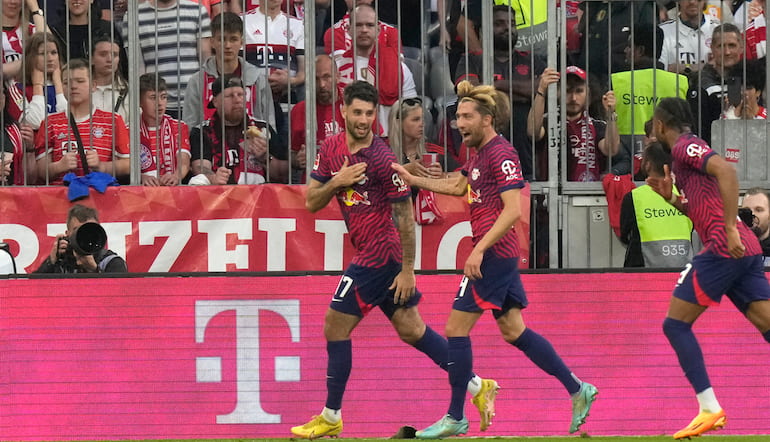
    Purely in pantomime terms Bruno Fernandes makes for a great footballing villain.

    For starters, who better to boo and hiss at than a Manchester United or Liverpool player, both clubs eliciting extreme responses, whether that be passion from a passionate fan-base, or resentment, and no little hostility, from everyone else. 

    At a push, Arsenal and their players can also be included in this equation. But only at a push.

    When one of these household names in question also put themselves front and centre, figuratively beating their chests, routinely quarrelling with officials, and overtly displaying devotion to the cause, then all the better in bringing out the worst in us.

    It is these traits after all that separate, let’s say, a Marcus Rashford and a Fernandes; or Thiago at Anfield from Virgil Van Dijk, because while one routinely goes about their business, being excellent footballers, the other makes a big, dramatic show of who they are, and who they play for. 

    They put themselves forward as leaders, in doing so becoming symbols of clubs that, let’s be honest, are not exactly popular beyond their faithful fans.

    Comparing Van Dijk and Fernandes, however – the two current captains of the respective Reds – takes us to the heart of why the latter is so thoroughly irksome. 

    Because while it is undoubtedly true that Van Dijk irritates, in the manner in which he preens and poses through contests, playing centre-back as if he’s 007 in boots, he at least shows up and fronts up against anyone and everyone.

    Whether Liverpool are playing inferior fare or are in a Champions League final, the Dutchman is a pivotal presence, leading from the back. He’s a General, if you will. 

    Fernandes also has form for this, putting himself right at the heart of proceedings, scheming and bewitching with the ball at his feet, all while making himself a favourite of the live betting community for his ability to conjure up a moment from nothing.

    Out of possession too, he is often a protagonist, heavily involved.

    Crucially, though the 28-year-old is selective in his grasping of responsibility, doing so typically when his side are at home to a relegation struggler, or any side really who still hold United in the highest esteem. 

    Elsewhere, when coming up against equals, the Portuguese attacking midfielder tends to become anonymous and ineffective. As quite as a mouse and about as impactful as a chocolate teapot. 

    Failing this, he self-combusts, revealing to all the world his heightened petulance and this we saw in evidence at Anfield recently with an extended hissy-fit for the ages.   

    With Liverpool making a mockery of the football betting by racking up a record-breaking score-line, no-one expected the United contingent to take it well, not should they have. 

    Yet still, his behaviour at Anfield that Sunday afternoon was nothing but pathetic, kicking out at opponents, feigning injuries – something he is known for above and beyond his peers – and pushing officials.

    At a late juncture it was believed that Fernandes requested he be taken off and though that wasn’t the case, that people assumed this says a great deal. 

    The attacking midfielder wasn’t a leader that day, when his team really needed one to stabilize matters amidst a crisis. He was a problem and a cry-baby. 

    Since joining the Premier League in 2020, Bruno Fernandes has repeatedly shown himself to be a flat-track bully, one who delights in punching down but throws tantrums when challenged. And no-one likes or admires bullies.


    *Credit for all of the photos in this article belongs to AP Photo*
    March 10, 2023

    By Stephen Tudor

    Ste Tudor
  • ">
  • Body

    Stephen Tudor is a freelance football writer and sports enthusiast who only knows slightly less about the beautiful game than you do.

    A contributor to FourFourTwo and Forbes, he is a Manchester City fan who was taken to Maine Road as a child because his grandad predicted they would one day be good.

    Stephen Tudor
    factcheck
    Off
    hidemainimage
    show
    Hide sidebar
    show
    Fullwidth Page
    Off
    News Article
    Off

    Match Information

    • Gillingham Town 3-2 Radstock Town

    • When: Saturday 4th March 2023

    • Kick-off: 3pm

    • Where: Woodwater Lane, off Hardings Lane, Gillingham, Dorset SP8 4WL

    • Competition: Western League Division One

    • Attendance: 42


    The Dorset town of Gillingham houses 11,700 residents and is pronounced with a hard ‘G’ as in in the gills of a fish. This is different to the more famous Kent town which everyone knows sounds like “Jillingham”.

    Anyway, I had previously been to Gillingham Town’s old ground at Hardings Lane in 2017 just before they vacated it.

    On that occasion, I had a stroll 200 yards down the adjacent dusty track called Woodwater Lane to look at where their new stadium was being built and noticed a railed-off playing area was already in place.

    The entire venue was subsequently completed to Step 6 Non-League grading standards. So for this latest groundhop, I decided on a 300 mile round trip back to Gillingham via the M25, M3 and A303.

    To my delight there were no traffic problems en route, even when I passed Stonehenge where a lengthy delay is normal at the main roundabout.

    Ground Description

    Neat and tidy. Ample car parking spaces are available. A metal prefab grandstand containing 100 seats in four rows lies alongside the pitch plus covered terracing for 100 behind one goal.

    Some grass banking stretching the length of the far touchline provides elevated viewing for spectators. The dressing rooms, clubhouse, tea bar and toilets are all located in converted portacabins.

    Unusually for modern Non-League football, there are four corner pylons for the floodlights. These are powered by a noisy generator. I liked the gentle semi-circular curve of the perimeter railings at either end.

    Tony Incenzo Diary of a Groundhopper


    Trains rumble past close by on a busy railway line. I also had a pre-match browse around the old Hardings Lane ground which is still partially intact. Three young lads were having a kick-around whilst I carried out my impromptu inspection.

    The exterior fencing has been removed as has the roof of the original grandstand, although the seating remains along with pitch railings, goal posts and the floodlights.

    However, it was sad to see the dug outs have been heavily vandalised. I understand the playing surface can be used for Gillingham Town youth fixtures when necessary.

    Programme Details

    On sale at the entry hut for £2. Plenty of good reading material which provided a nice matchday souvenir for me. 

    The Match

    Radstock dominated early on and raced into a 2-0 lead courtesy of strikes by Jacob Bird (4 minutes) and Matthew Curnock (37 mins). The result seemed done and dusted at half-time.

    Yet to my great surprise, Gillingham battled back grabbing three second half goals from Jordon Clapp (61 mins), James Boyland (68 mins) and Max Westlake (80 mins).

    The home side defended frantically late on but they were roared to victory by excited supporters yelling: “Come on Gill”.

    The People

    The chairman Patrick Fricker has been involved at Gillingham Town for 20 years. He gave me a warm welcome on the day and spoke very proudly about his club. They were originally founded in 1879 thereby claiming to be Dorset’s oldest football team.

    Patrick told me the recent ground move was necessary because they only had a year-to-year lease from a local farmer on the old pitch so it was difficult to develop the facilities there.

    Gillingham Town Tony Incenzo


    The new site had to be entirely levelled before football could take place. He also said he wants to grow the club’s profile within their town because “many nearby people don’t even know that we are here”. 

    In addition, I received an interesting tweet after the match from @IsaacStatue reminding me of a totally unique football twinning exercise between Gillingham FC and Gillingham Town FC… 

    “April 22nd 2006, Football League/Kent Gillingham played Yeovil Town away, then a number of Gills fans, me included, went to support Gillingham Town in their home game, which had been scheduled to kick off later for our benefit."


    *Credit for photos in this article belongs to @TonyIncenzo*


    FIRST PUBLISHED: 9th March 2023

    March 9, 2023

    By Tony Incenzo

    Tony Incenzo
  • ">
  • Body

    Tony is an experienced football broadcaster who has worked for Clubcall, Capital Gold, IRN Sport, talkSPORT Radio and Sky TV. 

    His devotion to Queens Park Rangers saw him reach 50 years without missing a home game in April 2023.

    Tony is also a Non-League football expert having visited more than 2,500 different football grounds in his matchday groundhopping.

    You can follow Tony on Twitter at @TonyIncenzo.

    Tony Incenzo
    factcheck
    Off
    hidemainimage
    show
    Hide sidebar
    show
    Fullwidth Page
    Off

    Presently all thoughts concerning Manchester United are heavily informed by their seven-goal mauling at Anfield. 

    It was a seismic result that made a mockery of the online betting odds beforehand and threatens to undo the good work that has been implemented at the club since the arrival of Erik Ten Hag.

    Or at least that’s how some are understandably interpreting a staggering afternoon that produced a staggering score-line.

    Others insist it was just a very, very bad 45 minutes spent at the office.

    However their season’s nadir is viewed though it doesn’t detract from the fact that United are recovering extremely well from a sustained period of struggle that followed the retirement of Sir Alex Ferguson in 2013.

    Across a tough and drawn-out decade, a behemoth of English football lost their way, misplacing their identity in the process, and – as so often happens when a big club freefalls – a litany of managers ultimately pulled them in different directions, all of which led to under-achievement. 

    In just nine short months the Dutchman has restored order at Old Trafford, that’s his most fundamental feat to date, before we even get to the Reds’ vastly improved performances.

    By ruthlessly rooting out the disruptive influences in the dressing room and getting the rest of his players fully invested in his ways he has ensured that United are united again. All pulling in the same direction. All singing from his hymn sheet.

    And naturally, given the quality of individuals within the squad, when this transpires, more wins occur than defeats, but the club’s renaissance goes far beyond eradicating abject showings against inferior opponents. 

    Their recruitment has been excellent, bringing in Lisandro Martinez at the back who was exactly the kind of combative centre-half they needed, a player who fronts up to, and clearly relishes, a challenge.

    In midfield, Casemiro has stamped his class on an engine room that used to hopelessly flail at times under the limitations of a ‘McFred’ pairing. 

    In the attacking third the jury remains out on United’s £82m purchase of Antony but to compensate for this – cliché incoming, and a bad one at that – the stunning rejuvenation of Marcus Rashford has been like a new signing for United and the coaching of Ten Hag has to take some credit for that.

    Across all competitions, the England striker has scored 30% of his side’s impressive haul, and moreover provides a genuine threat.

    We could go further of course, highlighting the dramatic improvements seen in numerous players who looked to be previously coasting, while United are tactically flexible now, and crucially are capable of executing each mandate to a high standard. 

    From this, their form going into a shocking collapse on Merseyside amounted to the second best in the top-flight from two games in. From this, we can deduce that Manchester United are becoming a force to be reckoned with once more.

    It will be fascinating come the summer to see where Ten Hag’s emerging creation is priced in the Premier League betting to win next season’s title. It is reasonable to expect them pitched among the favourites. 

    And that reveals infinitely more than a heavy loss to a hated rival. 


    *Credit for all of the photos in this article belongs to AP Photo*

    March 8, 2023

    By Stephen Tudor

    Ste Tudor
  • ">
  • Body

    Stephen Tudor is a freelance football writer and sports enthusiast who only knows slightly less about the beautiful game than you do.

    A contributor to FourFourTwo and Forbes, he is a Manchester City fan who was taken to Maine Road as a child because his grandad predicted they would one day be good.

    Stephen Tudor
    factcheck
    Off
    hidemainimage
    show
    Hide sidebar
    show
    Fullwidth Page
    Off
    News Article
    Off

    At the beginning of this campaign all of the Premier League betting that concerned Fulham focused on the possibility of relegation and this was hardly a surprise.

    Despite greatly impressing last season in coming up from the Championship, the same was true of two years ago and four years ago when similarly they secured promotion. On each occasion they immediately dropped, becoming in effect a yo-yo club.

    There was no compelling evidence that this time would be any different.

    Soon enough though, indeed right from their tremendous opening-day display at home to Liverpool, it became apparent that Marco Silva’s side had serious designs on breaking this cycle, an inkling partly based on Aleksandar Mitrovic grabbing a brace that afternoon.

    Having gained an unwanted reputation for being prolific in the second tier but shot-shy in the top-flight, two goals from the outset boded extremely well for both the burly Serb and Fulham.

    The Cottagers were fearless, fluid and well-organised against the Reds, ceding most of the possession but little else. They looked like they meant business.

    Losing just one of their first five games – and that to a late cruel blow at the Emirates – was a flag planted into the sand and even when gravity began to take hold and the defeats came Fulham continued to give a good account of themselves, scoring in each of their six losses leading in to the mid-season break. 

    By the time Qatar 2022 eventually honed into view, Fulham proudly resided in ninth. That’s not too shabby for a team widely tipped in the online betting to drop before a ball had even been kicked. 

    Once Premier League action resumed it got better and better for Silva’s men, winning four on the bounce, their latter victory coming at the expense of their neighbours and long-time superiors Chelsea and you would think at this juncture that praise would be widely lavished on the over-achievers from West London, a popular club at the best and worst of times. 

    Instead, for whatever reason, Fulham’s unexpected charge into the European spots has been somewhat overlooked, with Brentford and Brighton getting all the love.

    Regardless, they play on, exceeding expectations on an almost weekly basis and doing so by virtue of attractive but carefully-orchestrated football.

    At the back Tim Ream, their leader-in-chief, has been consistently superb, aided on either side by flying full-backs in Kenny Tete and Antonee Robinson who are both so criminally under-rated their general regard should be jailed with the key thrown in the Thames.

    In midfield, summer signing Joao Palhinha has bossed many of the stats attributable to his position and ahead of the Portuguese tackling-machine Willian is enjoying a career renaissance, adding some genuine class to Fulham’s attacking mandate. 

    Then there’s Mitrovic, the king of Craven Cottage and adored by its faithful. To date, the 28-year-old has scored 0.57 goals per 90. 

    At some juncture it has to be properly recognized what Marco Silva and his well put-together collective are achieving this term and perhaps that starts here. 

    The Cottagers are fearless, fluid and well-organised, happy to cede possession but little else. They truly mean business.


    *Credit for all of the photos in this article belongs to AP Photo*


    March 8, 2023

    By Stephen Tudor

    Ste Tudor
  • ">
  • Body

    Stephen Tudor is a freelance football writer and sports enthusiast who only knows slightly less about the beautiful game than you do.

    A contributor to FourFourTwo and Forbes, he is a Manchester City fan who was taken to Maine Road as a child because his grandad predicted they would one day be good.

    Stephen Tudor
    factcheck
    Off
    hidemainimage
    show
    Hide sidebar
    show
    Fullwidth Page
    Off
    News Article
    Off

    We are all very aware of who the established 'big six' are, the clubs in question being Liverpool, Manchester United, Manchester City, Chelsea, Spurs and Arsenal.  

    These are the marquee names who have come to define the Premier League, dominating the conversations, dominating the winning of silverware, and so elite is their stature compared to the distinctly everyday Wolves and Southamptons of this world they have been given a practical shorthand term, to denote their supremacy. 

    They are the established ‘top six’, aside from the few occasions when another club dares to briefly muscle in on their turf. Then, to make it clear who is being referred to, they are the ‘traditional’ big six. 

    Really though, how odd all of this terminology is, when it’s accepted there is nothing traditional about their perceived aristocratic standing at all.

    As for their established hegemony, in 24 of the Premier League’s 30 years of existence at least one of these sextuplet have finished seventh or lower come May. 

    Granted, Manchester City pre-takeover does a lot of heavy lifting in this statistic, but still.

    Furthermore, when the Premier League first came into being back in 1992, this celebrated cabal consisted of five clubs, with Everton included and City and Chelsea nowhere to be seen.

    The story goes that two years prior, representatives of Liverpool, United, Arsenal, Spurs and Everton kicked up a hefty fuss about television revenue being shared out equally and from this resulted a breakaway league, the one we know, love, and hate to varying moderations now. 

    From this too came the first accepted cabal at the top. The ‘big five’.

    A decade on, Everton were mercilessly ejected from what was perceived to be a closed shop at the top, and soon after Spurs also lost their place as Chelsea, United, Liverpool and Arsenal qualified for the Champions League pretty much each and every year. 

    Across 11 seasons, only three other clubs got a look in, by finishing fourth or better – Newcastle (twice), Spurs and Everton.

    The rest of the time this ruling quartet dominated proceedings, swapping titles like Pass the Parcel and finding themselves short-priced in the sports betting every August. So it was, the ‘top four’ was born. 

    In due course, Manchester City were – very reluctantly – invited into the VIP enclosure, their sustained success necessitating their entry. At some point too, from a succession of high finishes, Tottenham were invited back and this brings us to the present.

    To an established top six that isn’t especially established. To a traditional ‘big six’ that were first grouped together about ten years ago. 

    The potted history above is designed to illustrate that gaining, and retaining, royal status in the Premier League is not something that is set in stone.

    That it is, to an extent, fluid and from this a discussion can be had about the current health of the ‘big six’ and how it is generally regarded. 

    Certainly, for the time being its future appears to be secure, an appraisal based on Arsenal finishing eighth two years running in recent seasons yet still able to renew their membership without any complaints.

    Both Leicester and West Ham meanwhile have made daring forays into the highest echelons of late but found themselves blackballed as potential appointees. 

    In hindsight, that was the correct decision, with both now battling relegation.

    Because what we have learned from Manchester City’s circumstances is that the criteria needed to join the elite comes from sustained and consistent success and when we consider how their rise happened all eyes inevitably turn to the north-east, to Newcastle and their transformational takeover.

    Might the newly-minted Magpies break into the top six/big six sometime soon? And if they do, who drops out to make room, or will the phrase be broadened to a seven?  

    Elsewhere, beyond the influx of vast fortunes, what is particularly interesting is the challenges being made by fearless upstarts, clubs that have got their recruitment right and are busy making inroads into the ‘established’ elite via damn good football.

    At the start of this season, Fulham’s Premier League betting odds centred only on the possibility of an immediate return to the Championship. Eight months on, they reside a lofty seventh, pleasantly surprising on a weekly basis. 

    Brentford too are impressively staking a claim for some heightened real estate, as good a run club as they come.

    As for brilliant Brighton, should they continue to defy gravity and produce outstanding fare for the next couple of years, perhaps a debate will be had about the fairness of Spurs being viewed as a ‘top six’ entity, and not the Seagulls.

    For the time being however the status quo of the current landed gentry will remain. History tells us though that change is always around the corner.


    March 7, 2023

    By Stephen Tudor

    Ste Tudor
  • ">
  • Body

    Stephen Tudor is a freelance football writer and sports enthusiast who only knows slightly less about the beautiful game than you do.

    A contributor to FourFourTwo and Forbes, he is a Manchester City fan who was taken to Maine Road as a child because his grandad predicted they would one day be good.

    Stephen Tudor
    factcheck
    Off
    hidemainimage
    show
    Hide sidebar
    show
    Fullwidth Page
    Off
    News Article
    Off

    Horse racing can be a thrilling sport to watch, both on TV and live in the stands. Cheltenham is a popular course in the racing calendar and is a favourite among punters thanks to showcasing the very best in jumping.

    Meanwhile the Grand National is one of the famous races in the world, viewed by a whopping 600 million people each year. 

    But what makes horse racing a great social event? Research, commissioned by 888sport, polled 2,000 adults and discovered how popular horse racing actually is for us Brits. Read on to find out more about the races and other sporting trends.

    The Three Big Meetings

    There are the big three races on the calendar: Cheltenham Festival, Grand National and Royal Ascot.

    Our research found that as many as 90% of followers of the big three racing events will have a flutter, typically placing a stake on six races – but it’s not just the betting which attracts viewers and visitors.

    In fact, nearly 4 in 5 (79%) horse racing fans make events like Cheltenham and the Grand National a social occasion.

    Infographic Horse Racing Trends


    It should come as no surprise that racing is seen as a social event, given that 20% of respondents said they become a fan just for the duration of these sporting occasions, despite not typically watching the sport.

    Piquing Interest

    The big annual events in horse racing are a great way to pique interest in a sport they may not have previously considered.

    Although 44% of people interested in horse racing only follow the main events such as Grand National and Cheltenham, our research found 40% of all those surveyed are interested in going to a live horseracing event in the next 12 months. 

    This is a phenomenon we see beyond horse racing events – our research found 35% only ever follow tennis during Wimbledon.

    A quarter (23%) only watch rugby when the Six Nations are on, 18% only tune in to Formula 1 when the British GP takes place and 39% of people only watch football during a major competition such as the World Cup or Euros.

    Horse racing statistics


    But 34% enjoy watching sports they haven’t viewed before, so such events can sometimes be great gateways into new interests.

    A spokesperson for 888sport says: “The fact that so many people are interested in these events despite not typically following the sport shows the appeal that Cheltenham and other events held.

    “Across the 28 races there will be twists, turns, and upsets galore – spectators will be on the edge of their seats – we can’t wait.”

    Becoming experts in the field

    Have you ever started watching a sport and transformed into an expert? You’re not alone!

    Our study also found, of the 34% of adults who follow horseracing, 51% claim to become an expert in it, but only for the duration of the events – the Grand National, Cheltenham, and Ascot in particular.

    Horse racing expert


    Despite over half of people claiming to be an expert, only 21% always research details around the best horses, trainers and other details. So how does one pick a winner?

    It’s all in the name.

    horse racing name


    The top methods used when choosing which horse to place a stake on include:

    • The horse’s name 
    • The odds 
    • Past successes of the thoroughbred
    • Weather conditions 
    • Tips from racing supplements and blogs 
    • The colour of the jockey’s uniform.

    With 59% of all adults having bet on a horse race at one time or another, only 21% claim to have a good instinct for picking out a winner.

    Backing the favourite

    So is there method in the madness of backing a horse based on a name? Looking at the odds can highlight how the bookmakers think a race will go, however, the favourite doesn’t always win.

    In fact, 3 in 10 Cheltenham races (30%) see the favourite take the crown. And if the favourite doesn’t win every time, could the name make you a winner? 

    Well back in 2022, Commander Of Fleet crossed the line a champion in the Coral Cup at Cheltenham with impressive odds of 50-1. 

    • Global Citizen finished first in the Grand Annual Handicap Chase with odds of 28-1.

    • The impressively named Ahorsewithnoname didn’t come first, but with 50-1 it came pretty close in second place.

    • The Nice Guy was declared the winner with 18-1 odds.

    Whether you have a connection to a name, think it’s funny, or love to back an underdog – there might just be something behind a name. 

    The horse racing calendar

    With Cheltenham Festival around the corner, you can start to plan for the year ahead.

    The three major racing events take place in the first half of the year, so there are plenty of opportunities to take some friends to a day at the races or grab the girls for ladies’ day:

    • March: Cheltenham Festival
    • April: The Grand National
    • June: Royal Ascot

    So who’s attending? People in the 18-24 age group appeared to be the most interested in attending a horseracing event in the future.

    Horse racing age


    While the 18-24 and 25-34 age groups are also the most likely to plan their year around one or more key events of the UK sporting calendar – not just horse racing!

    The research discovered 81% like to watch major sports events – the likes of the Superbowl, the Boat Race, and the Ashes. With 35% of those passionate fans planning their entire year around them.

    A spokesperson for 888sport says: "There are those who like to stick to one or two sports and follow them closely, those who watch everything going, and those who just watch the big events.

    “Whatever your preference, there are plenty of events to choose from and enjoy.”


    *Credit for all of the photos in this article belongs to AP Photo*


    March 7, 2023

    By 888sport

    888sport
    Body

    The 888sport blog is here to offer betting and tipping advice on the biggest sports fixtures, events and competitions around the world.

    888sport
    factcheck
    Off
    hidemainimage
    show
    Hide sidebar
    show
    Fullwidth Page
    Off
    News Article
    Off