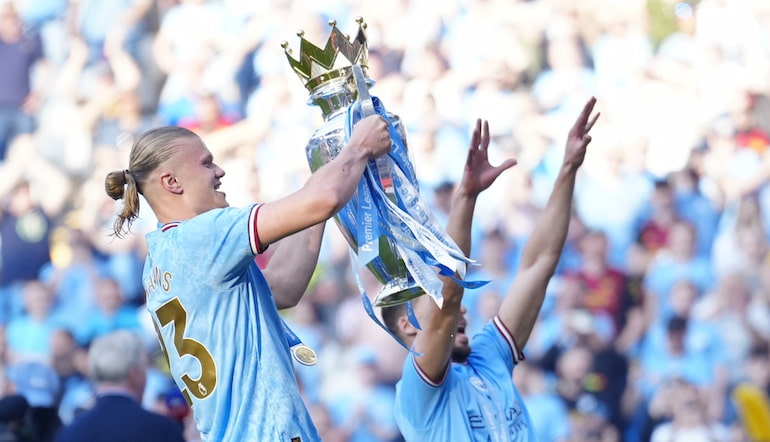
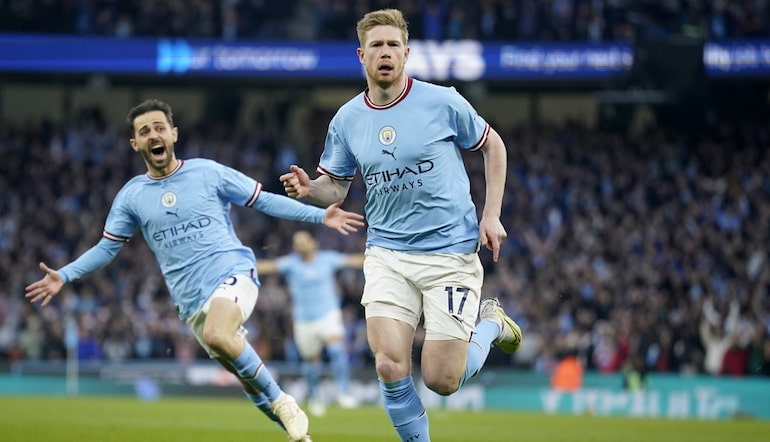
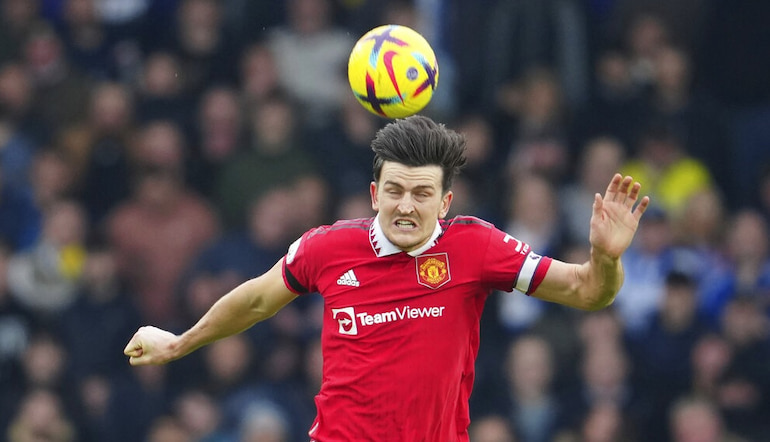
There is an awful lot to admire about Pep Guardiola’s Manchester City, from the intricacy and invention of their possession football right down to the sheer artistry of players such as Kevin De Bruyne.

They are, should you not be on the receiving end of a ruthless thumping, or a supporter of a direct rival, a joy to behold. 

Since first gracing the Premier League with his genius in 2016, the Catalan has overseen four titles, averaging 89.3 points per season in the process and presently the Blues are prominent in the Premier League odds again, as they chase down Arsenal.

888sport

It is a scale of dominance rarely before seen in English football, executed with a style never before seen, so with all that acknowledged you would think that commentators, pundits, journalists and the public via social media would be spoilt for choice when praising this phenomenon, should they be so inclined.

As for commenting on, or analysing, this all-conquering creation what fabulous and fascinating riches are to be found when studying its nuances, a convoluted concept that has had a profound influence on every level of the game.

Why is it then, that only one detail is ever highlighted, a detail that even if true would be at most the seventeenth most interesting aspect of this generational side. That it is false, indeed completely and utterly incorrect, just makes this tired old trope all the weirder. 

For the first time in print, but definitely not needed for the last time, let it be said that Manchester City do not possess an awesome and enormous squad.

It is a lie spun ever so casually by commentators on every matchday, barely waiting for the opening whistle to finish its parp before mentioning that City have Aymeric Laporte, Jack Grealish and that scourge of the live betting markets Riyad Mahrez on the bench.

Their combined transfer fees are then mentioned before some fanciful editorialising concludes that the Blues have an unfair advantage over their rivals. How can poor Manchester United, Liverpool and the others compete given the ridiculous depth City have?

Barely a day goes by on social media too when this fabrication isn’t put forward as the main reason why City won that weekend, maintaining their position at the league’s summit. A quick search on Twitter sees their squad described as ‘massive’, ‘incredible’ and ‘obscene’.

How on earth does it make sense therefore that earlier this season the CIES Football Observatory determined that in the past calendar year City have fielded the fewest number of players in the Premier League?

Just 26 compared to 41 by Chelsea and 35 by Manchester United. And to repeat, City have not only used the fewest players in relation to their rivals. 

They have the smallest squad in the whole league.

Indeed, they have used the second fewest in world football across the last five years and not by accident either, with Guardiola admitting at the start of 2022/23 that he prefers to work with a select group of players. 

It’s why City have won all of their titles without having a specialist left-back in their ranks. It’s why so many players are reimagined, deployed in secondary roles. Its why Kevin De Bruyne is run into the ground season on season. 

So can we please dispense with the enormous squad line concerning Manchester City. Not only is it wrong. It couldn’t be further from the truth. 


*Credit for all of the photos in this article belongs to AP Photo*


March 22, 2023

By Stephen Tudor

Ste Tudor
  • ">
  • Body

    Stephen Tudor is a freelance football writer and sports enthusiast who only knows slightly less about the beautiful game than you do.

    A contributor to FourFourTwo and Forbes, he is a Manchester City fan who was taken to Maine Road as a child because his grandad predicted they would one day be good.

    Stephen Tudor
    factcheck
    Off
    hidemainimage
    show

    UEFA and the European Clubs’ Association are ‘close to an agreement’ for four more rounds of Champions League fixtures from 2024, as reported by The Times.

    A change to the Champions League format has cropped up frequently in recent years. The ECA had previously suggested 10 extra rounds of fixtures.

    While the new format is yet to be agreed upon, it’s increasingly probable that the Champions League will look significantly different in four years’ time.

    Expansion of the group stage, by making it eight groups of six rather than four, is another option. A second round-robin phase, which other knockout tournaments have flirted with in the past, has reportedly been considered, too.

    For a competition that is watched worldwide, and with such riches, a desire to make changes might come as a surprise to some. The motivations are mixed.

    The current 32-team capacity of the Champions League in the first round looks set to swell in 2024. More matches are an obvious by-product.

    Other changes to the format will have different impacts depending on the structure. The agreement UEFA and the ECA settle on will give a good indication of the motivations.

    Potential benefits

    The oft-mooted European Super League is a contributing factor for Champions League change. Appease the giants, giving them more of what they want, and they will hopefully not be as keen to break off.

    More revenue from matches against one another is what the elite crave. It’s the founding premise of a Super League.

    The matches between Juventus and Barcelona generate more interest and revenue than a group stage match between Real Madrid and CFR Cluj.

    Fans Europewide are opposed to a Super League. Kevin Miles, chief executive of the Football Supporters’ Federation, in June 2019 said, “These proposals are totally counter to the principles of sporting achievement, and the knock-on effects would be disastrous throughout the game.”

    While expansion of the Champions League won’t be universally popular either, it might be a necessity to quash the rising desire for a European Super League.

    Growth of Europe’s premier competition means more matches. The Champions League is fun. Our look at the greatest Champions League finals is a reminder of some classics.

    More Champions League seems like a good thing from an entertainment perspective, particularly if the new format can avoid meaningless matches.

    Keeping the significance of every result, every piece of magic and every error, is the golden ticket to retaining the Champions League’s appeal. Maybe keeping groups to teams of four is the best way to do so.

    The world’s best club competition rarely has a quiet night. There are always going to be one-sided affairs, of course, but for every 6-0 drubbing there are plenty of crackers between evenly matched teams.

    There would be understandable scepticism about expansion and who it would benefit most.

    There’s a possibility – albeit remote – that it opens doors for smaller nations and gives a route to greater revenue for clubs that would previously fall in the qualification stages.

    Money is being increasingly pooled at the top. In a study from 2017/18, the top five leagues accounted for 75% of the revenue generated by the 712 clubs involved.

    Expanding the Champions League, in theory, could help this. It could be a way to close that gap.

    Downsides To Expansion

    The diversity of the competition is unfortunately a good criticism of expansion, too.

    Changing the Champions League to please the elite clubs doesn’t fit with opening doors for teams like Ferencvarosi, who have finished in the top two in the Hungarian top tier nine times since the turn of the century but have never appeared in the Champions League proper.

    Financial disparity between the Europe’s elite and the rest is worsening.

    The risk of an expanded Champions League is the rich getting richer, and the additional places going to fifth and sixth in the Premier League, La Liga and Bundesliga rather than creating opportunities for nations that cannot currently get close to the competition.

    On the aforementioned study, UEFA president Aleksander Čeferin said, “The report highlights a number of threats to continued European football stability and success.

    "These include the risks of globalisation-fuelled revenue polarisation, of a fragmenting media landscape and of cases of overdependence on transfer activity revenue."

    It could, of course, be argued that a Super League, and a restructuring of the Champions League to favour the top five leagues, would be one of those ‘number of threats’.

    More Champions League matches would push the club schedule, particularly in England, to breaking point.

    The Club World Cup already forced Liverpool into some unpopular decisions and teams in Europe often field second XIs in the League and FA Cups.

    With increased pressure to install a proper winter break, the consequences for domestic football would be brutal. The season would need to be lengthened or the cup schedules would have to change.

    Perhaps this could be the end of Champions League teams playing in the League Cup at all.

    As revenue from the Champions League grows, the current concerns about teams prioritising next season’s Champions League spot over silverware would only escalate.

    Champions League Restructure: Is It Worth It?

    If implemented correctly, restricting the Champions League could be beneficial, and it will be a bonus for players looking to amass the most Champions League appearances.

    It’s the implementing it correctly part that is the concern. The motivating factors for a bigger Champions League aren’t about spreading the wealth or improving the product.

    Slowing the forces for a European Super League is a positive for many, but there might not be many other upsides for the game as a whole.

    For fans of the top clubs playing each other, though, it could be great if the format can balance extra fixtures without losing the high stakes.

    *Credit for the main photo belongs to Darko Bandic / AP Photo*

    March 23, 2023
    Body

    Sam is a sports tipster, specialising in the Premier League and Champions League.

    He covers most sports, including cricket and Formula One. Sam particularly enjoys those on the other side of the Atlantic Ocean – notably MLB and NBA.

    Watching, writing and talking about sports betting takes up most of his time, whether that is for a day out at T20 Finals Day or a long night of basketball.

    Having been writing for several years, Sam has been working with 888Sport since 2016, contributing multiple articles per week to the blog.

    Sam Cox
    factcheck
    Off
    hidemainimage
    show
    Hide sidebar
    show
    Fullwidth Page
    Off
    News Article
    Off

    MODERN day football fans are thoroughly entertained by the comprehensive television exposure of our national sport. 

    All the top matches are shown live on the box, with millions of armchair observers and public house customers enjoying the coverage.

    888sport

    There are also extensive highlights programmes, with every goal from the Premier League and the Football League being screened. The action can even be viewed on the internet and on mobile phones.

    But back when I was a kid in the 1970’s, there was extremely limited TV access to football. The only live games were the FA Cup Final, the England versus Scotland annual fixture, the European Cup Final, matches from the World Cup Finals and an end of season England Schoolboy international.

    BBC1 had an hour long Match Of The Day highlights programme on a Saturday night. This would show selected segments from two League games only. Commentary was mainly provided by Barry Davies and John Motson. 

    My favourite team QPR often featured – especially if a scheduled televised game elsewhere had been postponed at the last minute. Therefore the cameras would then hurriedly pop around the corner to Loftus Road from the BBC TV studios in White City. 

    London area viewers could watch ITV’s The Big Match for an hour on a Sunday afternoon as well. Presented by Brian Moore, this offered extended highlights from a League game in London plus brief excerpts from two fixtures elsewhere in the country (predominantly the Midlands, North-West, Yorkshire, East Anglia and North-East regions).

    Alongside the wonderful Moore, match commentators included Keith Macklin, Gerald Sinstadt, Hugh Johns, Roger Tames and Gerry Harrison.

    In addition, both Match Of The Day and The Big Match broadcast FA Cup highlights from the Third Round onwards.

    Furthermore, there were very brief snippets of a League match every Saturday evening on the BBC2 News programme. This two minute report came via a grainy newsreel camera. 

    The coverage of midweek games was extremely restricted too with only one fixture being shown each Wednesday night in an hour long programme. It would be a match from the League Cup, an FA Cup replay or from one of the European club competitions – either on BBC1’s Sportsnight With Coleman (presented by David Coleman) or ITV’s Midweek Sports Special. 

    The only other highlights programmes were the Saturday lunchtime previews – Football Focus on BBC1 and ITV’s On The Ball.

    Due to this limited coverage, some of the greatest games from the 1970’s were not aired on television. Indeed, many fantastic goals from that era did not get recorded for posterity.


    MY ESCAPE FROM A HOTEL FIRE 

    I LITERALLY got on like a house on fire when I completed visits to all the Scottish League grounds.

    It was back in October 1982. I deliberately left Glasgow Rangers as the last club to go to as their Ibrox Stadium had just been rebuilt in majestic fashion.

    I was an impoverished 19 year old university student back then with a tight financial budget. But I decided to do my final Scottish stadium in style by travelling up the night before and staying in a city centre hotel.

    My room was up on the second floor and I went to bed early. Suddenly at two o’clock in the morning, I was woken by the thunderous sound of smashing glass from down below.

    I jumped out of bed and rushed to the window to see what was going on. To my utter amazement, the hotel was on fire and there were flames cascading from the floors beneath me. Three fire engines were trying to fan the blaze with their gushing hoses.

    I grabbed my football grounds scrapbook and ran out of my room, down the stairs and out through the front door.

    The embarrassed chief fireman said to me in his strong Glaswegian accent: “Och son! We thought we had cleared everyone oot of the building. I didnae realise you were still inside there the noo.”

    So I spent the rest of the night shivering on the pavement with a blanket wrapped around me until the fire had been extinguished.

    I then headed off to Ibrox stinking of smoke and saw Glasgow Rangers beat Hibernian 3-2. I was interviewed on BBC1 Scotland that day by the legendary commentator Archie Macpherson and he couldn’t believe I had escaped from a major fire before going to the match!


    *Credit for all of the photos in this article belongs to @TonyIncenzo*


    March 21, 2023

    By Tony Incenzo

    Tony Incenzo
  • ">
  • Body

    Tony is an experienced football broadcaster who has worked for Clubcall, Capital Gold, IRN Sport, talkSPORT Radio and Sky TV. 

    His devotion to Queens Park Rangers saw him reach 50 years without missing a home game in April 2023.

    Tony is also a Non-League football expert having visited more than 2,500 different football grounds in his matchday groundhopping.

    You can follow Tony on Twitter at @TonyIncenzo.

    Tony Incenzo
    factcheck
    Off
    hidemainimage
    show

    It has not been the easiest of years for Chelsea, all things considered.

    Back in March 2021, the UK government took the unprecedented step of sanctioning a Premier League owner, freezing Roman Abramovich’s assets and prohibiting any transactions with British businesses due to his links with Vladimir Putin. 

    In doing so, a club he had bankrolled for two decades was put in a state of paralysis, given a ‘special license’ to continue operating but unable to make a single penny of profit. Not even a branded pencil case could be sold in the club shop.

    For a grim period that lasted several weeks the future looked extremely bleak for a club that had the latest replica of the Champions League trophy gleaming in their trophy cabinet.

    There was widespread talk of a player exodus that summer. A grand total of 16 lucrative sponsorship deals suddenly came to an end. 

    For a while back there, the suggestion that Chelsea could simply cease to be, was not an overly ridiculous one.

    The situation resolved itself when a consortium headed by the American billionaire Todd Boehly completed its takeover in late May, purchasing the serial league -winners for £4.25 billion and then came more transformative news, when Abramovich agreed to write-off a staggering £1.5 billion of debt that came in the form of loans owed to him. 

    With Chelsea securing a Champions League place, and now furnished with considerable funds to compete in the summer transfer window, it seemed crisis that bordered on outright catastrophe had been successfully navigated and a new chapter at the Bridge beckoned. 

    Only then the troubles continued, this time on the pitch as Thomas Tuchel was sacked just six games into this campaign and as the Blues slipped down the Premier League betting odds they turned to Graham Potter, a manager who was – unfairly or otherwise – cast from the outset as someone out of his depth at such a huge institution.

    Over-achieving with Brighton was one thing, but could the 47-year-old accrue three points on a weekly basis when they’re demanded, not merely hoped for? And could he do so while managing and massaging superstar egos into the bargain?

    Early indications were positive, with an eight-game unbeaten streak including two impressive victories over AC Milan in the Champions League but then reality bit and bit hard.

    Exiting both domestic cup competitions to Manchester City, the Blues also spiralled dramatically in the league, winning just two of their 15 commitments between mid-October and the end of February.

    At this juncture it was revealed that Potter had the worst win percentage of any Chelsea boss in the Premier League era.

    Naturally enough, around this nadir rumours began to circulate that Potter’s job was hanging by a proverbial thread but to Boehly’s credit he has repeatedly backed his manager, insisting this is a long-term project being undertaken and his coach is pivotal to it.

    Further encouragement can be sourced in two recent wins in the league and crucially too progression to the last eight of the Champions League, though a last-minute concession to Everton this week may conceivably stall any momentum gained. 

    All of which brings us to the present and a largely traumatic season for Chelsea that is heading for its final straight. Potter remains short-priced in the betting to not see out the year.

    The Blues meanwhile remain hopelessly adrift of a top four spot, with even qualification for the Europa League looking beyond them. 

    At least now though there are slivers of hope, where previously there seemed none.

    Still, this is a club seriously troubled and even if crisis may be temporarily averted. This is a club in need of rehabilitation following a terrible year. The billion pound question therefore is how to heal and finally turn their fortunes around.

    Looking for a solution leads us not to Potter but to Boehly, even if it’s critical that Chelsea’s under-pressure manager starts to get results from the ways and means he has implemented at the Bridge.

    Should he not, then his employer’s patience will surely be tested to its very limits. 

    And oddly, it is Boehly’s patience that partly informs Chelsea’s problems, making up one half of a contradictory approach that has left them a chaotic mess at their worst and a barely functioning compendium of talent even on their good days. 

    Because on the one hand, the American practices sensible long-term planning and continuity by sticking with Potter.

    On the other, he has overseen two frenetic and reactive transfer windows, full of scattergun signings so seemingly random it has seen him accused of treating his club as if he’s playing Football Manager.

    Bringing in eight new players last summer at a cost of a quarter of a billion pounds, then signing eight more halfway through the season, for a further £150m, does not bring constancy. It reeks of rash and reckless irresponsibility. Moreover, it makes Potter’s job so much harder. 

    There is a deep irony here, because down the years a good deal of Chelsea’s success has come from investment, from buying the best of the best. 

    But now, with a squad packed with disparate, expensive talent, Boehly needs to put his chequebook away. He needs to trust in the manager he is happy to publicly back and let him coach.


    *Credit for all of the photos in this article belongs to AP Photo*


    March 20, 2023

    By Stephen Tudor

    Ste Tudor
  • ">
  • Body

    Stephen Tudor is a freelance football writer and sports enthusiast who only knows slightly less about the beautiful game than you do.

    A contributor to FourFourTwo and Forbes, he is a Manchester City fan who was taken to Maine Road as a child because his grandad predicted they would one day be good.

    Stephen Tudor
    factcheck
    Off
    hidemainimage
    show
    • Record-breaking greatness was once assumed of Rory McIlroy

    • The Northern Irishman won multiple majors early in his career

    • Ever since, his earnings have soared, but his reputation has flat-lined


    These days we are used to Rory McIlroy being an almost-constant fixture at the top end of the golf world rankings but it’s easy to forget just how stratospheric his rise was from the off.

    Having blazed a trail through the junior and amateur circuits, the Northern Irishman swiftly found himself touted as the next Tiger Woods, a lofty comparison that seemed wildly over the top until he won the US Open in 2011 by an eight-stroke margin, smashing a tournament record for the lowest ever score into the bargain.

    Should anyone have still doubted that here was a generational golfer, McIlroy then proceeded to claim a further three majors in three years, the most celebrated being a British Open triumph on Merseyside.

    In 2013, ‘Wee Mac’ was the third-most marketable athlete in the world, behind Neymar and Messi.

    Only there have been no major successes since, a drought that has endured for eight long years with 29 attempts adding up to a catalogue of failures and near-misses.

    There have been tournament wins elsewhere of course, a good smattering on them on the PGA and European tours, some of which came with extravagant prize money that saw his net worth soar.

    Yet if majors are what ultimately define greatness – a template created by Woods – then it can reasonably be argued that a career that once promised the world has not lived up to expectation.

    The reasons for this are multifarious. Injuries have played a part, as too McIlroy’s habit of dismantling aspects of his game and starting anew, not always to good effect.

    Several late collapses meanwhile – including one particularly disastrous final round at Augusta in the US Masters – have also prompted some to question his mental strength.

    Such has been his erratic form, as recently as last year he plummeted down the rankings to an all-time low.

    Nobody, however, can ever question McIlroy’s elite ability, nor his propensity to bounce back, and an impressive recovery of self means he goes into next week’s British Open not only in fine fettle but priced up in the online betting as the 9/1 favourite to again lift the famous claret jug.

    It matters too that this year the Open is being held at a course he loves and is meaningful to him having begun his professional journey there over a decade ago.

    Will he do it? Four rounds of challenging golf navigating the tough St Andrews terrain and negotiating the unpredictable Scottish weather will determine that but if the 33-year-old’s destiny is unknown what can be stated for sure is that there is infinitely more than prestige and prize money at stake this time out.

    McIlroy’s standing and reputation is on the line. So too, in a broader sense, his legacy. Winning the Open Championship in 2022 would be huge for his long term status in the sport.

    This may sound harsh, perhaps even excessive given that in the sport’s history only 19 golfers have won more majors than the former teenage prodigy from Holywood, Count Down. Context however, is everything.

    For McIlroy has claimed the same number of majors as Brooks Koepka, a sublime talent admittedly but still a man whose skillset resides one level below great.

    Rory McIlroy Open


    He has won two fewer than Nick Faldo, again a golfer worthy of enormous acclaim but context tells us that McIlroy is naturally more gifted.

    Back in 2011, the golf odds on the sport’s new wonderkid one day surpassing Faldo’s tally would have been short indeed.

    That’s because McIlroy was magnificent, a phenomenon no less. He was complete and all things considered, when he finally hangs up his clubs, he should be remembered as a king.

    Instead, if his major-less streak continues, he will merely be recalled as a prince.


    April 11, 2023

    By Stephen Tudor

    Ste Tudor
  • ">
  • Body

    Stephen Tudor is a freelance football writer and sports enthusiast who only knows slightly less about the beautiful game than you do.

    A contributor to FourFourTwo and Forbes, he is a Manchester City fan who was taken to Maine Road as a child because his grandad predicted they would one day be good.

    Stephen Tudor
    factcheck
    Off
    hidemainimage
    show
    Hide sidebar
    show
    Fullwidth Page
    Off
    News Article
    Off

    Arsenal are literally flying in the Premier League race, a magical season for Mikel Arteta and his players after so many difficult years.

    A project that starts from afar and in which it is important to give credits to the Brazilian club's director Edu Gaspar: in the summer of 2021 Arsenal's situation was almost critical, many asked for Mikel Arteta to be sacked but the club defended him with conviction despite a very difficult moment.

    Fabrizio Romano articles

    In particular, Edu has always supported the manager even in discussions with the club board and from that moment Arsenal have managed to consolidate on and off the pitch: a perfect mix that has led to excellent results this season 2022/2023, waiting for to understand if the Gunners will be able to realize the dream of winning the Premier League in a still difficult and long race with Pep Guardiola's Manchester City.

    But what are the next steps of the Arsenal project?

    Investments have always made sense from season to season: in 2021 there was a revolution with many new arrivals and many unpopular changes, in 2022 this work was completed with quality additions and a top signing like Gabriel Jesus who Arsenal considers a proper top player for present and future.

    But as early as 2021, the club's ideas had been to bring Arsenal to a completion of the basic squad within 2/3 years to which they could add two or three top quality players, no longer six or seven new signings in one summer transfer window only.

    That's why quality signings can be expected from Arsenal next summer, with important investments that can really come as long as the right opportunity is found on the market.

    The example of their market approach is from... 14 months ago: Arsenal wanted Dusan Vlahovic in January 2022 and were ready to invest up to €60/65m, but the deal could not proceed because Vlahovic only wanted Juventus at that moment in his career.

    The Gunners' strategy was smart and forward-looking: don't panic, don't invest in other players you didn't believe in 100%, save the money and invest directly in summer 2022 in Gabriel Jesus as a top target rather than wasting money just because the fans expected a new striker in January.

    In view of July and August 2023, the example of the Mykhaylo Mudryk deal will also be useful: Arsenal wanted him as their top target but weren't ready to pay the €100m guaranteed fee, it could reach around €80m with add-ons but those those were the conditions... and so Chelsea increased the offer and surpassed the Gunners.

    They were disappointed, but immediately found a solution in Leandro Trossard on a smart and fast deal.

    Arsenal have a different vision: each target is worth a specific amount, there will be no crazy signings but important investments are ready if the right players are found at the right conditions, above all provided that the player is 100% convinced of Arsenal and he doesn't want other destinations as happened to Vlahovic, Manuel Locatelli or even Lisandro Martinez who was on the Gunners list a year ago and chose Manchester United.

    Arsenal are ready for major investments also thanks to their return to the Champions League, but the right conditions must exist.

    In which positions? Now the club is silent, cautious, focused on the new contracts of Bukayo Saka (to be signed soon), William Saliba (talks are ongoing) and later also Ramsdale and Xhaka. Arsenal want to isolate the squad for the Premier League dream and avoid distractions.

    But a new midfielder and a new winger are two possibilities that Arsenal will explore in the summer, perhaps not the only ones; keep an eye also on the fullback situation. But right now, the focus is only on the Premier League.


    March 20, 2023
    Body

    Fabrizio Romano is an Italian sports journalist. He was born in 1993, he lives in Milan and has over 30 million followers in total on the major social networks.


    He collaborates with 888sport, CBS Sports, Sky Sport, The Guardian and has been a transfer market expert since 2011. He will take care of a column dedicated to some "Behind the Scenes" of transfers.

    Fabrizio Romano
    factcheck
    Off
    hidemainimage
    show
    Hide sidebar
    hide
    Fullwidth Page
    Off
    News Article
    Off